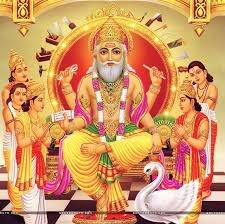
The Dhiman Caste is a Hindu caste that was traditionally associated with various areas like engineering, blacksmiths, goldsmiths, carpenters and craftsmen who are identified as Vishwakarma Brahmins or Jhangra Brahmins. They are geographically located in various North Indian states like Punjab, Haryana, Himachal Pradesh, Uttar Pradesh and Delhi. They trace their lineage to the Brahmins, but the government of India categorizes them as Other Backward Class. They are known to be the worshippers of Lord Vishwakama, who is considered the deity of engineering and architecture.
Key detailing
- What does Dhiman Mean?
The word Dhiman Caste refers to “Dhi”, which means mind, and “Man”, which means value. That means the word Dhiman refers to the intelligent and sensible man.
The origin has been mentioned in the Mahabharata and the ManuSmriti, where kings were addressed as Dhiman.
Some traditions link them to the descent of lord Shiva, while others connect them with the followers of Lord Vishwakarma.
- Historical Roots
The community members have been recognized as skilled craftsmen who work mainly as blacksmiths and carpenters.
- Geographical location
The primary geographical locations of the Dhiman caste are Haryana, Himachal Pradesh, Punjab and Uttar Pradesh.
- Occupation
They are known to a craftsman Dhiman Caste who work in various crafts like engineering, architecture, blacksmithing, carpentry or art. They are identified as Vishwa Brahmin or Dhiman Brahmin. They trace their origin to the five sons of Lord Vishwakarma, who is a Hindu deity of architecture and power. Their main occupation was in the fields of carpentry, blacksmithing, goldsmithing, metalworking, stone cutting and many more.
- Social status and identity
Talking about the various regions of Himachal Pradesh, carpenters are classified as OBC, while other groups like blacksmiths are considered as scheduled castes. It varies from location to location.
In the 1920s, various artisan communities adopted the Dhiman Brahmin identity so they could live a high social status.
Subcategories of occupation are:
- Engineering and architecture
The Dhiman Caste members who are working as engineers and architects are involved in construction, design and Vastu Shastra.
- Craftmanship
These are members who know their art skills and works are carpentry, metal work and artistry.
- Agriculture
There are many community members who are working as farmers and are also pursuing other skills to pursue different careers.
However, today, the community is not limited to their traditional work, but they have reached heights and are working in almost all professions regardless of their traditional occupation.
Cultural traditions!
They worship the Lord Vishwakarma. Their main festival is Vishwakarma Puja, which they celebrate with high enthusiasm. The day is celebrated with the worship of machinery and tools.
The Dhiman Caste maintains strong internal social cohesion while practicing endogamy to marry within the same community.
They tend to be strict vegetarians. There are around 47 Gotras, ensuring marriage occurs within the same caste but not in one Gotra.
Modernization!
The Dhiman Caste has advanced significantly in higher education. Now, many Dhiman members have shifted to the cities, leaving their traditional concentrated areas. However, they have evolved according to the latest India, but they have also preserved their roots.
Summary:
They are a perfect example of traditional skills while adopting modern ones. They are devoted to Vishwakarma while showing their contribution in sectors like engineering, education and so on.