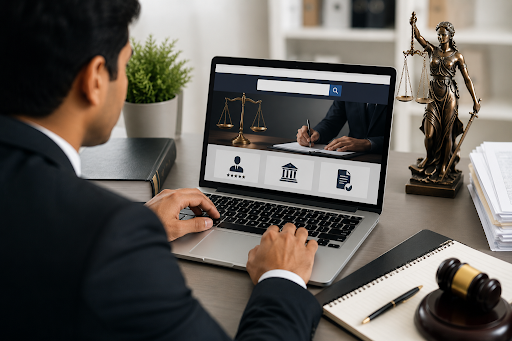
In this blog, we explain how to find the right Money Recovery Lawyers online in India – what qualifications matter, what questions to ask before hiring, red flags to watch for, and how lawyer advice online helps you act quickly and recover effectively.
Someone owes you money. You have sent messages. Made calls. Given extensions, you probably should not have. And now you are at the point where you know — this is not getting resolved without legal help.
The problem is finding the right legal help. Not just any lawyer. Someone who actually handles money recovery matters regularly, understands which legal route fits your situation, and can move quickly enough that the case does not drag on longer than the debt itself.
That used to mean asking around, visiting chambers, sitting through consultations that went nowhere, and eventually hiring someone based on a referral you were not entirely sure about.
Lawyer advice online has genuinely changed this. You can now connect with experienced Money Recovery Lawyers from wherever you are, share documents digitally, and get a proper legal assessment the same day rather than the same week. But finding the right lawyer online — not just the nearest available one — still requires knowing what to look for. That is what this blog covers.
Why the Type of Lawyer Matters More Than Most People Realise
This is the first thing worth understanding – and most people skip it entirely:
- Money recovery is not one type of case. It covers cheque bounce matters under Section 138 of the Negotiable Instruments Act. Civil recovery suits under the Code of Civil Procedure. Summary suits under Order 37 for cases backed by documentary proof. Debt Recovery Tribunal proceedings for larger institutional claims. Arbitration for disputes where the underlying agreement has an arbitration clause. And in some situations, criminal complaints under Section 420 of the IPC where deliberate fraud was involved.
- Each of these routes has different procedural requirements, different timelines, and different strategic logic. A civil recovery suit and a summary suit are both filed before a civil court — but a summary suit moves considerably faster when the evidence is strong. A cheque bounce complaint has statutory deadlines that force the process along. Arbitration can be faster than court proceedings when both parties are willing to participate.
- An experienced Money Recovery Lawyer understands the full range and knows which combination fits which set of facts. A general practice lawyer who handles recovery cases occasionally does not have that depth, and the case pays the price through wrong forum choices, missed routes, and unnecessary delays.
When searching for lawyer advice online for a money recovery matter, specialisation is the first filter. Not the only one — but the first.
Where to Actually Look
Several platforms now provide access to verified Money Recovery Lawyers across India. The key is knowing how to use what you find rather than just picking the first name that appears.
Legal service platforms with verified profiles — Vakilsearch – maintain lawyer profiles with practice area specialisations, years of experience, and client reviews. These give more structured information than a general internet search. A lawyer with multiple reviews specifically mentioning successful recovery matters carries more signal than one with generic positive ratings.
Bar Council registered directories confirm whether a lawyer is currently enrolled and in good standing. They are verification resources rather than search tools — but worth using as a cross-check when evaluating a specific name.
Initial consultations through lawyer advice online platforms are probably the most practical evaluation tool available. Speaking with a lawyer directly — even for thirty minutes — tells you more about their handling of money recovery matters than any profile page does. How they explain the legal route. Whether they ask the right questions about your specific situation. Whether their answer is specific to your case or generic enough to apply to anyone.
Questions Worth Asking Before You Hire
Most people go into legal consultations passively. They explain their situation, listen to what the lawyer says, and make a decision based on how confident the lawyer seems.
That approach misses a lot. Here are the questions that actually help you evaluate whether a Money Recovery Lawyer is the right fit.
What recovery route do you recommend for my situation and why?
The answer should name a specific route and explain why it fits the facts — not describe all available options without committing to one. Vagueness here means either the lawyer has not properly assessed the case yet or does not have strong enough experience to give a directional view.
Have you handled similar cases and what happened?
Not every case ends in full recovery — an honest lawyer will say so. What you are looking for is a realistic sense of the types and sizes of cases they have handled and what outcomes were actually achieved. Overpromising at this stage is a red flag, not a reassurance.
What is the realistic timeline for this type of matter?
A civil recovery suit takes longer than a summary suit. Arbitration can move faster when both parties cooperate. Cheque bounce cases have statutory deadlines that force movement. An experienced lawyer gives a realistic range — not an optimistic number designed to make the engagement sound appealing.
What documents do you need from me and what happens first?
An experienced Money Recovery Lawyer should be able to answer this immediately — agreements, invoices, correspondence, bank records, prior demand communications. If the answer is vague or deferred to a later conversation, the lawyer is still getting oriented rather than ready to act.
How are your fees structured?
Some lawyers charge fixed fees for the notice and initial filing stage. Some work on a retainer for the full case. Some take a percentage of the amount recovered. Understanding this upfront prevents confusion later and helps assess whether engaging makes financial sense relative to the amount being pursued.
Red Flags to Watch For
These are the signals that suggest a lawyer is not the right fit – regardless of how professional the initial impression is:
- Guaranteed recovery promises. No lawyer can guarantee a specific outcome in litigation. A lawyer who promises full recovery regardless of the facts either has not properly assessed the case or is saying what they think you want to hear.
- Inability to explain the legal route clearly. If a lawyer cannot explain in plain language which mechanism applies to your situation and why – civil suit, criminal complaint, DRT, arbitration – that gap will surface in the case eventually.
- Significant upfront fees before any case assessment. A proper online consultation with a lawyer evaluates the facts before committing to high costs. Large upfront payment requests before the lawyer has reviewed anything are a structural concern.
- Vagueness about process and timelines. A lawyer who cannot explain what happens after the notice is sent, what the court filing involves, or what the opposing party’s likely responses are suggests limited hands-on experience with recovery litigation specifically.
- Ten listed practice areas. A lawyer who handles everything handles nothing specifically. Money recovery requires focused experience — not someone who fits it in between matrimonial disputes and property registrations.
What Good Lawyer Advice Online Actually Looks Like
- When people seek lawyer advice online for money recovery matters, what they actually need — beyond legal knowledge – is clarity about where they stand and what to do next.
- A proper online consultation with experienced Money Recovery Lawyers does three things. It tells you whether the case is strong enough to pursue and what a realistic recovery looks like. It identifies which legal route fits the specific facts and why. And it gives you the immediate next steps – what documents to gather, what notice needs to go out, and what timeline to build around.
- That clarity — delivered quickly through lawyer advice online — moves someone from the paralysis of not knowing what to do into a structured legal process with a clear direction.
- For people outside major cities who would otherwise struggle to access experienced Money Recovery Lawyers in their specific practice area, online access removes a barrier that previously made quality legal guidance genuinely hard to reach.
One Thing Most People Do Not Think About Until Too Late
Under Indian law, the limitation period for filing a civil recovery suit is three years from the date of default. After three years, the right to file is extinguished — regardless of how clear the evidence is.
Three years sounds generous. In practice, months get spent on informal follow-ups, then more months finding the right lawyer, then more months gathering documents. By the time everything is ready, the window is tighter than it needs to be.
For cheque bounce cases, the notice must go out within 30 days of the bank memo. That window is not generous at all.
Getting lawyer advice online the moment it becomes clear that informal resolution is not working — not after exhausting every other option — preserves the maximum legal choices before these deadlines start closing.
Why Choose Vakilsearch
Vakilsearch connects individuals and businesses with experienced Money Recovery Lawyers who handle civil recovery suits, cheque bounce matters, summary suits, DRT proceedings, and arbitration. Every engagement begins with a proper assessment of the case facts, the most effective recovery route, and a realistic timeline — delivered through lawyer advice online that is accessible from wherever you are, without delays that cost you time and options.
CTA: Need to recover money legally? Get lawyer advice online from experienced Money Recovery Lawyers today — talk to a Vakilsearch expert and start the process before more time passes.
FAQs
- What type of lawyer handles money recovery cases in India?
Money Recovery Lawyers who specialise in civil litigation and financial disputes handle these cases. Depending on the amount and nature of the claim, the matter may go through a civil court recovery suit, a summary suit under Order 37, a cheque bounce complaint under Section 138, a Debt Recovery Tribunal for larger institutional claims, or arbitration if the underlying agreement includes an arbitration clause. A lawyer with specific experience across these routes gives the most effective guidance on which path actually fits the situation rather than defaulting to one approach for every case.
- Can I get lawyer advice online before deciding whether to file a money recovery case?
Yes — and doing so before filing is strongly recommended. Lawyer advice online lets you share the facts and documents with experienced Money Recovery Lawyers, get a proper assessment of whether the case is worth pursuing, understand which legal route applies, and know the realistic costs and timeline before committing to full representation. This early consultation regularly prevents people from pursuing a weak case expensively or from missing a stronger route they simply were not aware of.
- What documents should I prepare before consulting Money Recovery Lawyers online?
Gather the original agreement or written understanding, all invoices and payment records, bank statements showing the transaction or the default, all written correspondence including emails and messages, and any prior demand communications already sent. The more complete the documentation at the consultation stage, the more specific and actionable the lawyer advice online will be — instead of spending the first conversation establishing basic facts, the lawyer can assess the case and give direction immediately.
- What is the time limit for filing a money recovery case in India?
The limitation period for civil money recovery suits in India is three years from the date of default under the Limitation Act, 1963. For cheque bounce cases under Section 138 of the Negotiable Instruments Act, the legal notice must be sent within 30 days of receiving the bank’s return memo – a significantly tighter window. Getting lawyer advice online as soon as informal resolution stops producing results preserves the maximum legal options and ensures the most important deadlines do not pass while the situation is still being assessed informally.