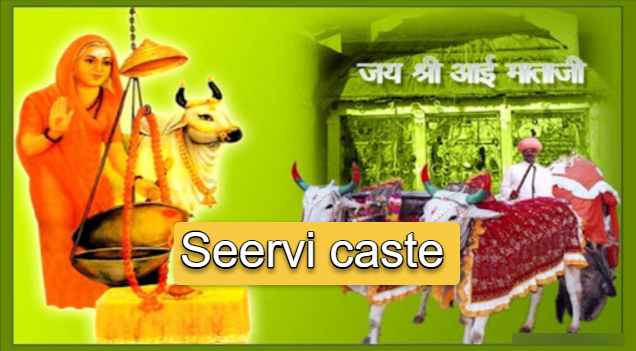
Seervi caste members are originally the inhabitants of Rajasthan, Godwar and Marwar region. They were settled in the total of 24 villages around Jalore after the command from the king. The followers of Aai Panth Mata Mandir have an age-old history of more than 800 years. The seervis are also known as kharadia rajputs who were traditionally involved in agriculture, farming and war based activities.
Seervi caste doesn’t believe in the traditional cremation system after death. Despite being Hindus, they believe in burial just like christians and muslims. Most of the sub groups are concentrated in the areas of Pali and Jodhpur. They maintain a close social structure and remain a part of community groups like Seervi Maha Sabha.
The diligent, honest and hard-working farmers are now found using the latest agricultural techniques for their survival. The Obc caste has the spirit of warriorship and trade in their blood.
Seervi-the origin
Originally, the term seervi means a good farmer. It was the 12th century when a fierce battle between king Girnar and the Sirvi community took place. Eventually, many seervi fighters lost lives and the remaining warriors migrated to Jalore. They were considered as kharadia rajputs.
Seervi caste members are divided as janva and khardia.The former are known as janva seervi whereas the latter mark their references in Rajasthan. They worship cows and include it as a part of every important ritual.
Seervi Kuldevi and gotra
Seervi believes in the worship of the sacred Aai Mata temple situated in the BilaraNagar district of Jodhpur. The origin of the temple can be traced back in 1561 where aai mata was believed to be the ardent student of her teacher. The temple was constructed in order to establish the cultural values for seervi communities and to help them follow the path of righteousness.
The temple of Aai Mata holds a very high spiritual value. It is believed that the holy oil lamp does not produce black kohl but instead gives orange colour leftover dry ash on burning. The priest looks after the cleanliness and other important activities on a regular basis.
Seervi surname details
The seervi caste follows the same principle as Parihar, Chavan, Solanki, Rathore, Pawar and Deora caste members. Some of the community people also visit nagochia Mata Mandir, Asha pura and Sundha Mata Mandir depending on their religious beliefs.
The community was involved in local farming practices and animal husbandry. Everything went under the permission of the king. It was later on decided to settle the leftover seervis after the war in 24 different villages of Rajasthan.
The hard-working community follows modest life practices and are spiritually uplifted. They follow Hinduism and a mix of other traditions which provide them a distinctive identity.
Final words
Even till date, the majority of seervi members are involved in agricultural activities. They serve the society and work heavily towards upliftment of one another. The kshathriya Rajput caste holds distinct cultural values and follows their traditional occupations most of the time. The age-old caste is still evolving and is well protected and preserved under the OBC quota by the ministry of Indian government.