Maize, often called the “Queen of Cereals” globally and popularly known as Makkai or Bhutta in India, is no longer just a humble rain-fed crop. In 2026, it has emerged as a high-stakes industrial powerhouse, driving everything from poultry feed and starch production to the booming ethanol blending sector. As India pivots toward sustainable fuels and protein-heavy diets, maize has become a vital pillar of the agricultural economy.
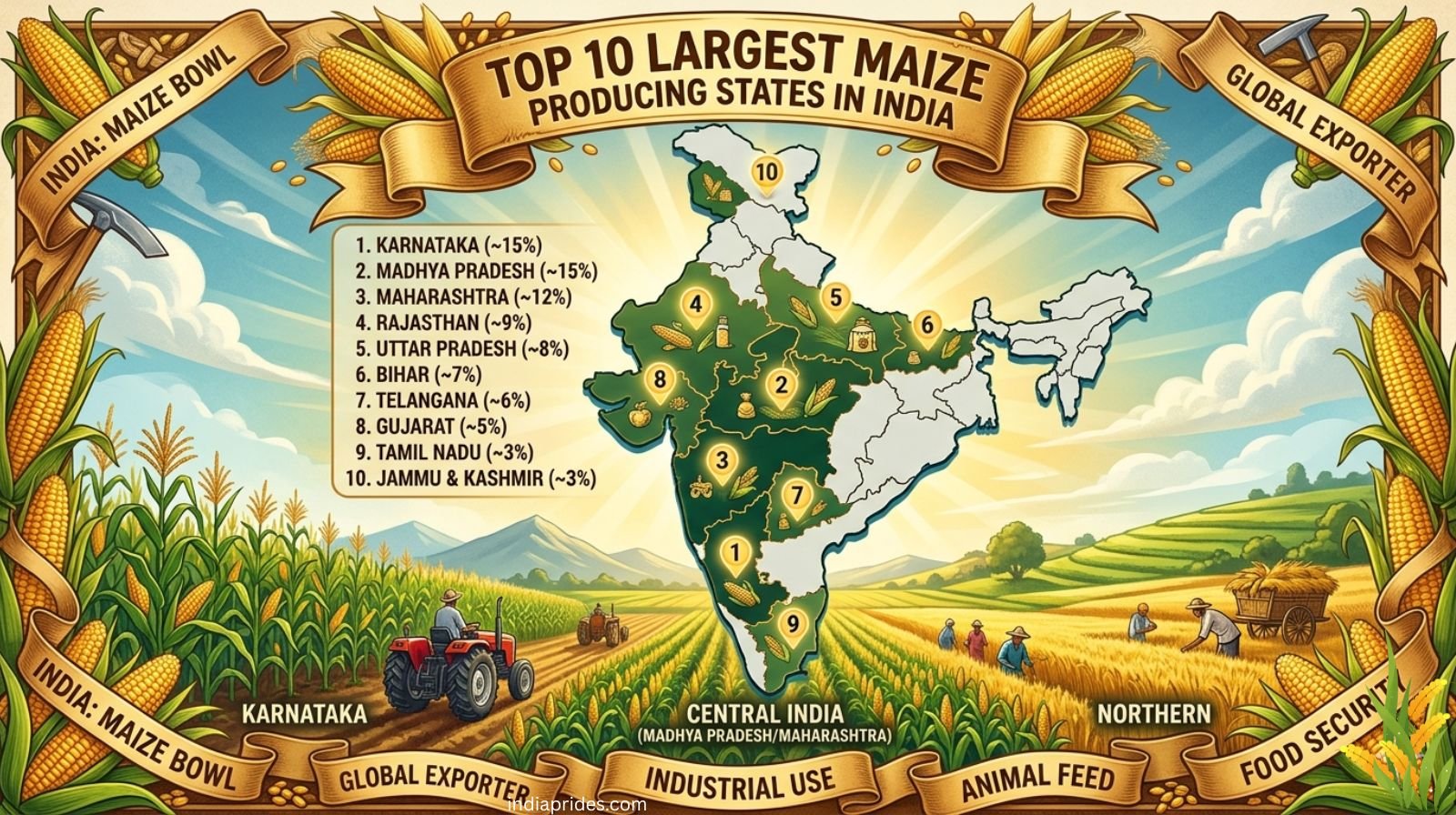
The versatility of maize is unmatched. It grows in diverse agro-climatic zones, from the hilly terrains of the north to the sun-drenched plains of the south. But which regions are leading this “Corn Revolution”? In this comprehensive guide, we uncover the top 10 largest maize producing states in India. Whether you are an investor, a student of geography, or a curious foodie, these insights will show you where the golden grain is flourishing.
1. Karnataka: The Maize Bowl of India
Karnataka continues its long-standing reign as the largest maize producing state in India. The state’s unique combination of mild climate and highly skilled farmers has made it the undisputed leader.
- Production Powerhouse: Karnataka contributes approximately 15% to 16% of the national maize output.
- Key Districts: Regions like Belagavi, Davanagere, Haveri, and Bellary are the primary hubs of cultivation.
- Hybrid Adoption: Karnataka leads in the use of high-yield hybrid seeds, ensuring some of the best productivity rates in the country.
- Economic Impact: Much of the produce goes directly into the state’s massive poultry and starch industries, creating a closed-loop economic success story.
2. Madhya Pradesh: The Central Giant
In recent years, Madhya Pradesh has seen a meteoric rise, often challenging Karnataka for the top spot. Its vast geographical area is its greatest strength.
- Massive Acreage: MP has one of the largest land areas dedicated to maize, particularly in the Kharif season.
- Modern Shift: The state has moved away from traditional varieties toward modern, drought-resistant hybrids.
- Key Regions: Districts such as Chhindwara, Betul, Seoni, and Dhar are legendary for their bumper maize harvests.
- Resilience: By expanding into Rabi (winter) maize, MP has significantly reduced its dependence on the unpredictable monsoon.
3. Maharashtra: The Industrial Engine
Maharashtra has successfully integrated maize into its industrial and agricultural fabric, securing a solid third place in national rankings.
- Diverse Utility: Maize in Maharashtra isn’t just for food; it is a primary feedstock for the state’s rapidly growing ethanol distilleries.
- Regional Hubs: Areas like Jalgaon, Pune, and Nashik have become centers for maize trade and processing.
- Technological Integration: The state’s farmers are early adopters of precision farming and automated irrigation, boosting yields per hectare.
4. Bihar: The Eastern Star
Bihar is perhaps the most impressive success story on this list. While it ranks fourth in total volume, it is a global competitor in terms of productivity.
- The Rabi Advantage: Bihar has mastered the art of Rabi maize. The cool winters and fertile Gangetic soil lead to record-breaking yields that rival the US Corn Belt.
- Districts to Watch: Khagaria, Begusarai, and Samastipur are the heart of Bihar’s maize production.
- Export Potential: Due to its high quality, maize from Bihar is increasingly sought after in international markets.
5. Telangana: The Productivity King
Telangana might be smaller in size than the top three, but its efficiency is world-class. It consistently ranks as a leader in yield per hectare.
- Irrigation Excellence: Massive investments in irrigation projects like Kaleshwaram have provided the reliable water supply needed for high-quality maize.
- Seed Capital: Since Hyderabad is the “Seed Capital of India,” farmers here have the first access to the latest biotech and hybrid seed innovations.
- Poultry Hub: As a leading poultry producer, the local demand for maize as feed keeps prices lucrative for Telangana farmers.
6. Tamil Nadu: The Precision Farmer
Tamil Nadu is another southern state that treats maize with scientific precision, focusing heavily on irrigation and nutrient management.
- High Productivity: Like Telangana, Tamil Nadu achieves yields far above the national average.
- Rabi Dominance: A large portion of its production happens during the winter, taking advantage of the North-East monsoon.
- Key Hubs: Districts like Salem, Dindigul, and Tiruppur are the major contributors.
7. Rajasthan: Defying the Desert
Rajasthan’s inclusion in the top 10 is a testament to the power of modern agriculture. In the arid zones of the west, maize has found a surprising home.
- Canal Impact: The expansion of canal irrigation has allowed farmers in regions like Banswara and Udaipur to cultivate maize successfully.
- Summer Crop: Maize is often grown as a summer crop here, providing a vital source of income when other crops fail to thrive in the heat.
8. West Bengal: The Rice Alternative
Known for its paddy fields, West Bengal has recently pivoted toward maize as a more water-efficient alternative to winter rice.
- Fastest Growing: West Bengal is currently seeing one of the highest growth rates in maize acreage in Eastern India.
- Malda and Murshidabad: These districts have become the primary centers for the state’s maize boom.
- Ethanol Push: The state government is actively encouraging maize cultivation to support new bio-fuel plants.
9. Andhra Pradesh: The Resilient Coast
Andhra Pradesh has a long history of maize cultivation, which remains a staple for the state’s agricultural economy.
- Coastal and Inland: Maize is grown both in the fertile coastal regions and the drier inland districts like Kurnool and Guntur.
- Strong Logistics: The state’s excellent port connectivity makes it a hub for maize exports to Southeast Asia.
10. Uttar Pradesh: The Alluvial Advantage
Uttar Pradesh rounds out the top 10. While the state is a leader in wheat and sugarcane, maize is gaining traction as a secondary cash crop.
- Gangetic Plains: The rich, alluvial soil of the plains provides a natural advantage for the Kharif maize crop.
- Diversification: Farmers in UP are increasingly moving toward maize to diversify their risks away from traditional paddy-wheat cycles.
The Science of the “Golden Grain” in 2026
What makes these states successful? It is a blend of environmental luck and scientific intervention.
- Soil Type: Maize prefers well-drained, loamy soils rich in organic matter.
- Climate: It thrives in temperatures between 18°C and 27°C.
- Water Management: While maize is more water-efficient than rice, it requires critical irrigation during the “tasseling” and “silking” stages.
Why the World is Watching India’s Maize
In 2026, maize is no longer just “corn on the cob.” It is the backbone of several massive industries:
- Animal Feed: Over 60% of India’s maize goes to the poultry and livestock sectors.
- Biofuels: With India’s aggressive 20% Ethanol Blending (E20) goal, maize has become a primary feedstock for “Green Fuel.”
- Industrial Starch: From your clothes to your medicines, maize starch is used everywhere.
- Snack Industry: The global love for popcorn and corn-based snacks shows no sign of slowing down.
Conclusion
India’s maize journey is a story of transformation. From the traditional fields of Karnataka to the high-productivity zones of Bihar and the industrial hubs of Maharashtra, maize is fueling India’s growth. These top 10 states are not just producing food; they are producing energy, feed, and economic stability. As climate change forces us to rethink our water use, the “Golden Grain” will likely continue its ascent, making every state on this list a vital player in India’s future.