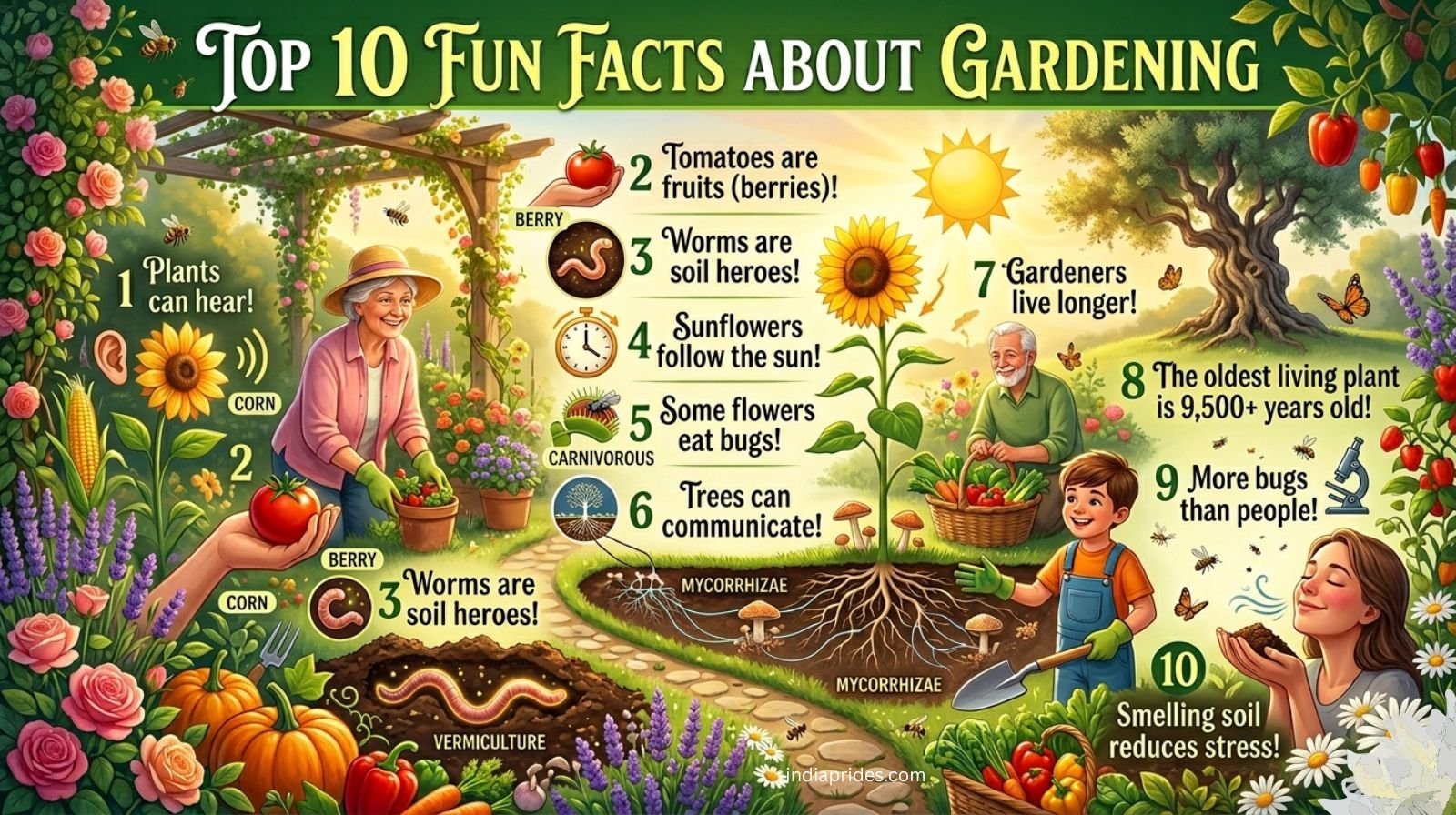
In the fast-paced, high-tech world of 2026, gardening has emerged as the ultimate “soul-tech.” It is no longer just a hobby for the retired; it is a global movement of sustainability, mental health, and biological wonder. Whether you are tending to a high-tech hydroponic garden in a city apartment or a sprawling permaculture backyard, the soil holds secrets that are stranger than fiction.
The act of planting a seed is a quiet rebellion against the digital noise. But beneath the surface of your flower beds lies a complex network of communication, history, and chemistry. This blog unearths the top 10 fun facts about gardening that will change the way you look at your green space forever.
1. Soil is a “Living Brain” (The Wood Wide Web)
Did you know that when you step on your garden soil, you are stepping on a sophisticated communication network?
- Mycorrhizal Fungi: These tiny fungal threads connect the roots of different plants.
- The Information Superhighway: Plants use this “Wood Wide Web” to send nutrients to struggling neighbors or even warn them about aphid attacks.
- Chemical Signaling: When a plant is nibbled by a pest, it releases volatile organic compounds (VOCs) through this network, prompting nearby plants to boost their chemical defenses.
2. Gardening is a Natural Antidepressant
It turns out that “getting your hands dirty” is scientifically proven to make you happier. This isn’t just about the fresh air; it’s about the bacteria.
- Mycobacterium vaccae: This harmless soil bacterium triggers the release of serotonin in the human brain, much like antidepressant drugs.
- Cortisol Reduction: Studies in 2026 show that just 20 minutes of active gardening reduces stress hormones more effectively than many other leisure activities.
- Grounding: The physical contact with the earth—often called earthing—helps regulate our circadian rhythms and improves sleep quality.
3. Your Plants Can Actually “Hear” You (And Water)
For years, people laughed at those who talked to their plants. In 2026, the science of bioacoustics has vindicated the “plant whisperers.”
- Vibration Sensitivity: Plants don’t have ears, but they sense vibrations. Research shows that certain plants, like pea seedlings, can “hear” the sound of flowing water through pipes and grow their roots toward it.
- The Sound of Pests: Some plants can distinguish between the sound of a gentle breeze and the specific acoustic signature of a caterpillar chewing, triggering an immediate defensive response.
- Frequency Matters: High-frequency sounds have been shown to improve seed germination rates in certain vegetable varieties.
4. Sunflowers are Nature’s Toxic Waste Cleaners
The humble sunflower is more than just a pretty face; it is a powerhouse of phytoremediation.
- Heavy Metal Absorption: Sunflowers are incredibly efficient at sucking up toxins like lead, arsenic, and uranium from contaminated soil.
- Chernobyl & Fukushima: Following nuclear disasters, sunflowers were planted en masse to help strip radioactive isotopes from the ground.
- Hyperaccumulators: They store these toxins in their stems and leaves, effectively cleaning the earth for future generations of organic gardening.
5. Most of Your “Vegetables” are Actually Fruits
Botany and culinary arts often disagree, leading to some of the most surprising gardening trivia.
- The Great Imposters: Tomatoes, cucumbers, peppers, pumpkins, and even green beans are botanically classified as fruits because they contain seeds and develop from the ovary of a flower.
- The Strawberry Paradox: Conversely, a strawberry isn’t a “true” berry. Botanically, it is an aggregate fruit, and those tiny yellow dots on the outside? Those are the actual fruits (called achenes), each containing a single seed.
- True Berries: Bananas, watermelons, and even eggplants are technically berries!
6. Trees are Social Beings That Support Their “Elders”
In a forest or a large garden, trees don’t just compete for sunlight; they operate as a family unit.
- Mother Trees: Large, older trees act as hubs, sending excess sugar to younger saplings that are stuck in the shade.
- Legacy Giving: When a “Mother Tree” is dying, she often dumps her remaining mineral resources into the network to benefit the surrounding seedlings.
- Species Cooperation: Trees have been observed slowing their root growth to make room for neighbors of the same species, showing a level of biological altruism that is truly inspiring.
7. The World’s Most Expensive Spice Comes from a Tiny Bulb
If you want to grow “red gold” in your garden, look no further than the Crocus sativus.
- Saffron Secrets: Saffron is derived from the tiny red stigmas of this specific crocus flower.
- Labor Intensity: It takes roughly 75,000 flowers to produce just one pound of saffron.
- The Harvest Window: These flowers bloom for only a few weeks a year, and the stigmas must be harvested by hand at dawn before they wilt in the sun.
8. Earthworms are the World’s Best Recyclers
Aristotle once called earthworms the “intestines of the earth,” and he wasn’t wrong.
- Soil Aeration: As worms tunnel, they create pathways for air and water to reach plant roots, preventing soil compaction.
- Vermicompost: A single earthworm can produce its own weight in “castings” (waste) every day. These castings are a nutrient-dense fertilizer that is five times richer in nitrogen than ordinary soil.
- Population Power: In a healthy garden, there can be over a million earthworms per acre, processing tons of organic matter into black gold.
9. Native Plants are the “Gas Stations” for Biodiversity
In 2026, the trend has shifted from manicured lawns to native gardening.
- Specialized Relationships: Many insects, like the Monarch butterfly, can only lay their eggs on specific native plants (like milkweed). Without the plant, the species vanishes.
- Drought Tolerance: Native plants have evolved to thrive in your specific local climate, meaning they require far less irrigation and zero chemical pesticides.
- Pollinator Corridors: By planting natives, your garden becomes a vital link in a “pollinator highway,” supporting bees and birds that are essential for global food security.
10. Gardening Can Actually “Slow Down” Time
Have you ever noticed how an hour in the garden feels like five minutes? This is known as the “Flow State.”
- Temporal Perception: Engaging in repetitive tasks like weeding or pruning shifts the brain into an alpha-wave state, reducing “time pressure” and anxiety.
- Observation Skills: Gardening forces us to operate on “nature’s clock.” You cannot rush a tomato to ripen; you must wait. This develops patience and mindfulness that spills over into the rest of your high-pressure life.
- Generational Impact: Planting a tree is an act of faith in a future you might not see. It connects the gardener to a legacy that spans decades or even centuries.
Conclusion: Why These Facts Matter for Your 2026 Garden
Gardening is far more than a set of chores; it is an interaction with a complex, sentient, and historical world. Understanding these Top 10 Fun facts about gardening transforms your backyard into a theater of wonders.
When you realize your soil is talking, your plants are hearing, and your worms are engineering the future, every seed you plant becomes a meaningful contribution to the planet. So, grab your trowel, embrace the serotonin, and get growing!
Frequently Asked Questions (FAQs)
Q: What is the easiest thing to grow for a beginner in 2026?
A: Microgreens and herbs like basil or mint are excellent starting points. They provide quick wins and can be grown even in small indoor smart-gardens.
Q: Do I need chemical fertilizers for a healthy garden?
A: Absolutely not. In 2026, organic gardening and composting are the preferred methods. Using “worm tea” or kitchen-scrap compost provides a more balanced, long-term nutrient profile.
Q: Can gardening really help with climate change?
A: Yes! Plants act as carbon sinks, and by avoiding synthetic fertilizers and supporting local biodiversity, your garden helps reduce the overall carbon footprint of your household.