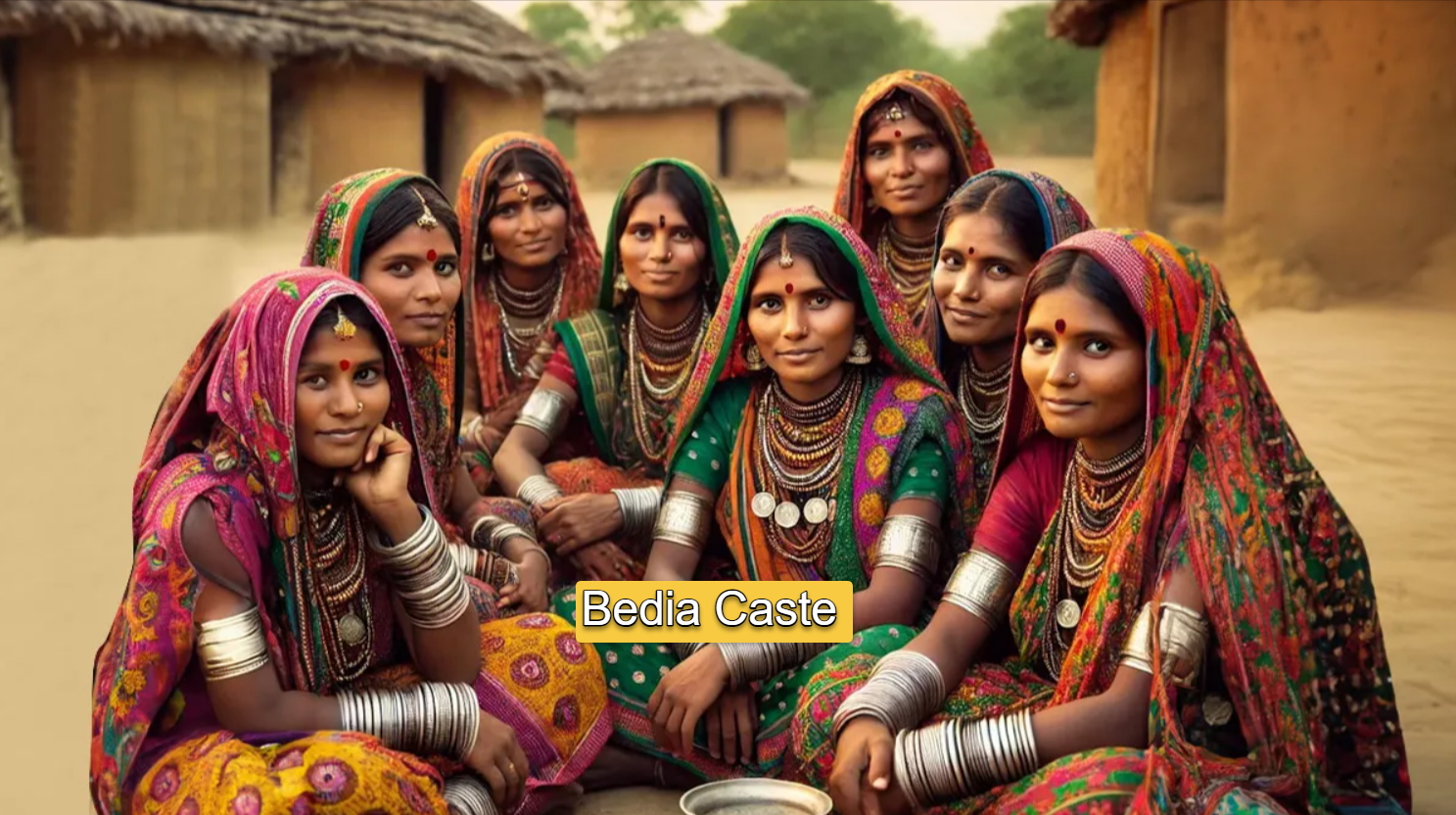
The Bedia caste community originally resided at Mohdipahar, located at Hazaribagh district. They are the descendants of ved bhansi Prince and munda girl. The tribe has a set of Vedas of their own because of which they were known as Bedias. Their Veda differs from the original Aryan vedic system followed by the usual Hindus.
Bedia caste community is mainly divided into tribal groups known as Gangapariya, nathotia and jogiara.
The nomadic tribe is notified under the criminal Tribes act by the government. They have settled down mainly in the areas of West Bengal and speak kurmali – Indo Aryan language.
What caste is Bedia and what language do members speak?
Bedia are scheduled caste tribe as per 2011 census of India, Uttar Pradesh. They speak the local Nagpuri language as they settled in the areas of West Bengal after their migration. The Indo-Aryan community uses the Devanagari and Bengali scripts together to communicate.
The clan members worship squirrels, parrots and tortoises. It celebrates jitia, sarhul and Phagun festivals.
The History of Bedia caste
Bedias are originally the nomadic community of India who have a very sad history behind. The women of the members were forced to become prostitutes and men were mostly criminals. The corruption of the community members gave them their name as Bedia. The term is derived from the word behra which means ‘The dweller of a forest’.
The Bedia community had plenty of misfortunes in their faith. They lived in northern and central parts of India. Women worked as folk dancers and entertained the iconic Kings of Taj Mahal during the 17th century. The trade of prostitution continued amongst the caste up till the 19th century where they were forced to deliver sexual pleasures to the muguls and their soldiers.
The Bedia caste now
Unlike any other community in India, Bedias celebrate the birth of a girl child with pombs and shows. They believe that their legacy of prostitution is taken further and their source of livelihood is now confirmed. Even after many legal prohibitions from the Indian government, Bedia till date practises the act of prostitution openly within and outside the villages.
Girls are made to participate in their ancestral trade of prostitution soon after hitting puberty. They mostly carry out the profession between the age of 15-35. The women in the community are mostly single as they prohibit marriage for professional reasons. The Bedia women have plenty of financial freedom but no respect in the society at all. They are objects for pleasure in the current patriarchal society.
The evolution of Bedias
Nowadays, many self-help groups and NGOs have emerged to create awareness for female education and its benefits. Bedia women are now leaving their age-old traditions and are making their mark in other areas of professions.
People who followed illegal activities and trade during earlier times have now started seeking their livelihood in agricultural activities. The nomadic lifestyle is now given up by the community members in majority. They are sharecroppers and farmers who work in multiple villages as labourers .