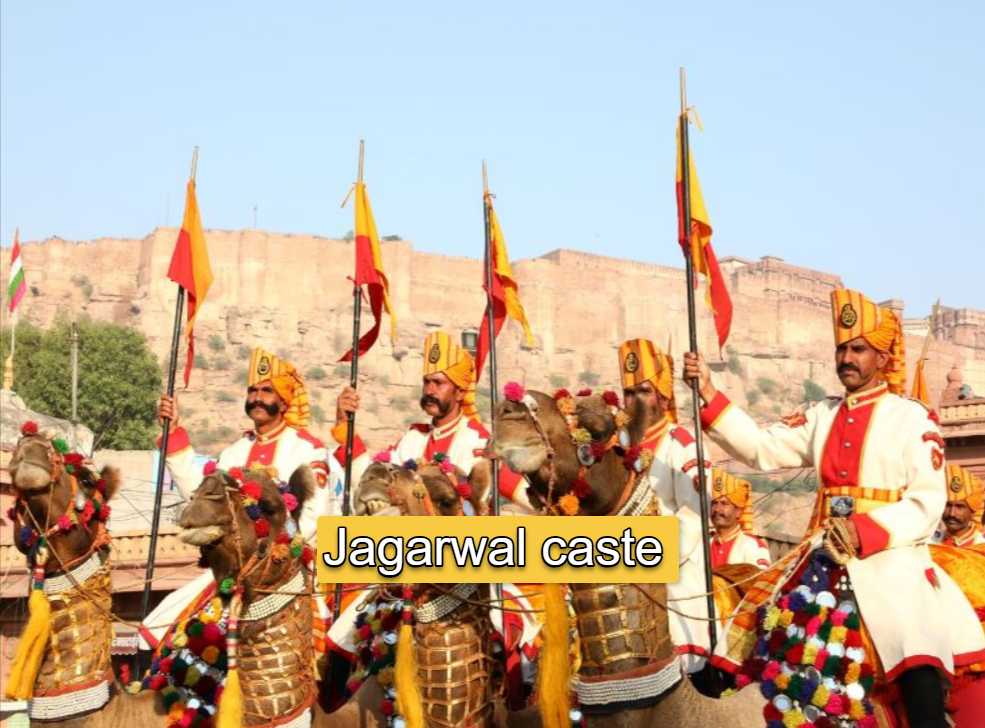
The Rajpurohit Brahmin community is mainly found in the Marwar area of Rajasthan. It should be noted that one should not confuse Jagarwal caste with Agarwal because of their similar spelling. Both the communities are entirely different from each other even though they have the same region of existence and resembling spellings.
The earlier community members of Jagarwals were the advisors of rajput rulers. They were commonly known to be the part of Rajguru sevad and Sodha clans.
Jagarwal origin and history
The origin of Jagarwal can be traced back in history of rulership and kings. They were the keepers of Jagirs(wealth) of the kings.
Another important thing to be noted about Jagarwal is their existence ever since the times of Vedas. They were amongst the Saptarishis. Eventually, they started participating in the wars and administration of kingdoms. Jagarwal caste is hence a complete mix of religious and rajput culture.
Jagarwal culture and social structure
One should not confuse Jagarwal to be an entirely priest community of the past. This is a very special Brahmin clan that did not specifically practice religious services in the temples. Although they are the descendants of Rishis and priests, they never execute the core brahmanical duties. They didn’t perform yajnas in matrimonial services either.
These Rajpurohit were not involved in any such acts. They rather participated in cultures, arts, educational services, battlefields and businesses. They were more of marwadi rajputs who carried Brahmanical surnames because of their ancestral linkage.
As a matter of fact, the Rajpurohit Rajput were excellent fighters who never feared sacrificing whatever they had. They had immense courage to sacrifice and win. The heroes of the community held a higher status in the society because of their incomparable attributes.
The history of Jagarwal
The RajPurohits are mainly the ones who have an important opinion in each matter of battlefield and a kingdom ship. Such individuals may be involved in performing rituals and handling a variety of different tasks. The position of Jagarwal was a very sacred and important one during the vedic period. They were the gurus and often referred to Rajgurus. Known for guiding the kings, Jagarwal ancestors were commonly philosophers, teachers and warriors themselves. The current generation of the caste represents the same knowledge and skills in the areas of administration, wars, business, religion, weaponry, agriculture and politics. The community members till date hold high-end virtues and are commonly involved in civil administration works.
Social transformation of Jagarwals
With the passage of the mediaeval period, a massive transformation amongst the community members took place. Previously involved in the administration of royal palaces and educating princes, the community slowly shifted towards educating themselves. Since the last few decades, the individuals are found managing villages and have came much closer to the Rajput culture. They continue to practice vegetarianism and wearing the sacred white thread janeu despite Their political transformation and empowerment.
Jagarwals were known for their strategic planning and immense knowledge. Hence, the current generation Community is often found involved in handling task systems and political tasks with amazing skills.