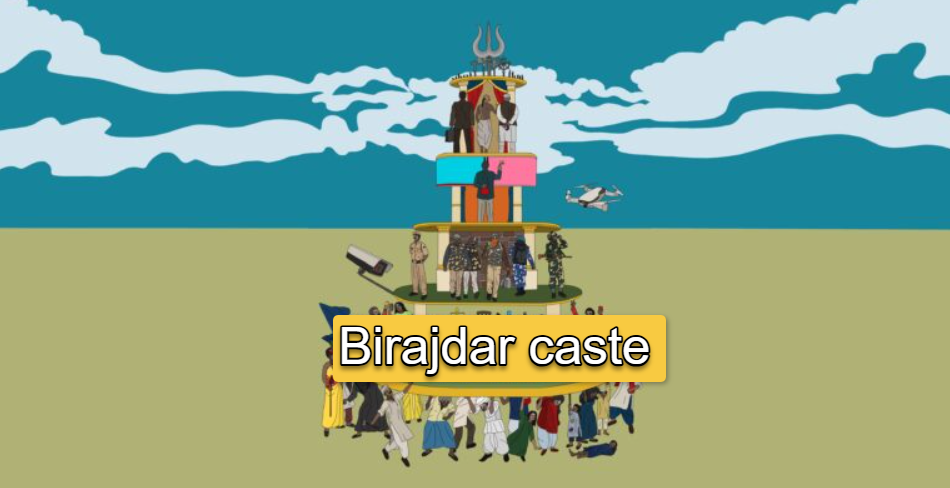
Birajdars interchangeably use Biradar as its surname. Predominantly a Maharashtrian community, the caste members fall under the general category of Hindus. They mostly live in the areas of Udgir in Maharashtra and practice revenue collection and taxations. The roots of the caste stems from the Maharashtrian word Bharatar which originally means brotherhood.
Birajdar caste history
Earlier, Carrying the Birajdar surname was a matter of honour and pride. The Individuals were historically rich and were the rich land owners.
The Marathi speaking caste members were hereditarily involved in administration activities. Their economic growth mainly stemmed from agricultural activities. It was the annual tax collections from the farmers and tenants that made a huge part of their revenues.
Birajdars were the district level record keepers, land owners and the tax collectors. They maintained law and order while ensuring that the farmers were met with their rights. In simple words, it can be said that the main task of the caste members used to be the linking bridge between the ruling powers and the farmers. They were the authoritarians who adopted different rules according to the requirements. In simple words, it can be said that Birajdars were mainly the keepers of labourers, local traders and agricultural tasks. They ensured to avoid any conflicts arising between the farmers and the zamindars.
After 1951, the abolition of the zamindari system resulted in the evolution of the caste members. Since, they were no longer tax collectors and keepers of the agrarian society, their involvement mostly shifted towards the military activities. The rural areas of Maharashtra still have the zamindari System which is soon expected to demolish from the roots with the coming generations.
Birajdar culture
Birajdar caste mostly adopts the Marathi culture which is influenced by the earlier Maratha Empire. The Birajdar samaj dedicatedly worships Lord Vitthal ( Ganesha) and Shivling in the form of Khandoba. The Kalubai Devi temple is also a prominent place of worship for the Birajdars.
The Traditional Birajdar menswear included pheta and Dhoti while women were mostly found wearing the Navwri Saree. Now days, men wear shirts and trousers while women are mostly found wearing salwar kameez. The occasions and festivals still remain commonly celebrated and recognised by the caste members.
The Birajdar samaj signifies the rich Maharashtrian culture in the form of heavy jewellery and floral decorations in the hair. The Kolhapuri saris and chappals remain to elevate the beauty of the community members for generations.
Birajdar caste is commonly found celebrating Gudi Padwa which is one of the most prominent festivals of Marathas. The first day of Hindu year marks the advent of Gudi Padwa. Another important festival celebrated by the Birajdar Maharashtrian community is Ganesh Chaturthi. The 10 day festival has a massive fan base.
The urban dwellers have somewhat different ways of celebrating the same festivals than the rural areas of Maharashtra. Lavani, Tamasha and Powada are commonly found in the villages of Maharashtra as a part of the typical Birajdar culture.