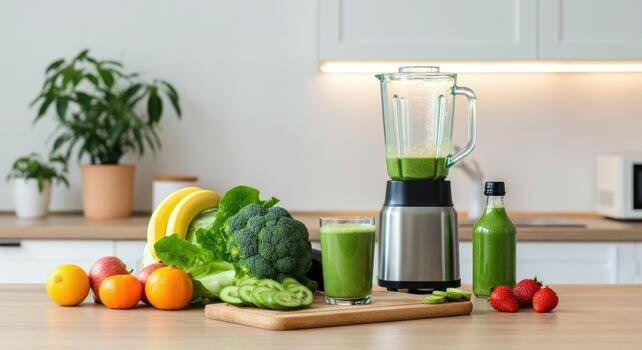
Ask the salesman at your local appliance store and he’ll probably wave a hand and say they’re basically the same thing. He’s wrong, and that wrong answer has emptied plenty of wallets. The muddle over blender and mixer is one of those small mistakes that shows up later, usually the first time you try to grind rasam powder and end up with a jar full of dust stuck to the sides.
Let me put it plainly. One is a liquid machine. The other is a grinding machine. A blender wants water, softness, motion. A mixer, the way we use it here, wants to break down things that fight back: whole spices, soaked lentils, chunks of dry coconut. On a spec sheet the blender and mixer look like cousins. In practice they barely speak the same language.
What Each One Is Really For
A blender is one tall jar, sharp angled blades, a motor that likes speed. Milkshakes. Soup. A mango lassi on a Sunday. Anything that already flows, it makes flow smoother.
Now the mixer. Two or three jars, usually. Different blades for different jobs, some blunt on purpose. And a motor built for grunt work rather than showing off.
Here’s where it gets interesting, and where most people get burned. Watts. Everyone fixates on the number. Indian mixers sit around 500 to 750 watts because dry grinding needs steady pulling power, not a quick sprint. But a solid 550-watt unit with the right blade shape will quietly beat a flashy 900-watt one that starts smelling hot after two minutes. I’ve seen it happen more than once.
Try grinding dry haldi in a blender sometime. Go on. The blades whir, the powder climbs the walls, and you’re left with clumps. Feed the same batch into a decent mixer grinder and it’s fine powder in seconds. That gap, right there, is the whole argument between a blender and mixer in a single test.
The Comparison That Settles Most Arguments
| Feature | Blender | Mixer |
| Best at | Liquids, smoothies, soups | Dry grinding, wet pastes, batters |
| Jars | Usually one tall jar | Two to three, different sizes |
| Motor tuning | Speed for liquids | Torque for hard grinding |
| Dry spices | Struggles, poor result | Powders finely |
| Idli or dosa batter | Rarely manages it | Handles it well |
| Typical Indian use | Occasional | Daily |
Why Indian Cooking Tips the Scales
Picture an ordinary Tuesday. Batter that has to come out coarse and airy for idlis. A coconut chutney nobody wants grainy. Garam masala you’d rather grind fresh than buy in a packet. Ginger-garlic paste, again, because it ran out.
A blender can’t do most of that. Soaked rice jams it. Dry cardamom just rattles around. This is the exact spot where the blender and mixer question stops being a shop-floor debate and becomes obvious in your own kitchen. So much of how we cook is grinding, and grinding is the one thing a mixer was actually made for.
Flip it around, though, before you commit. If your kitchen mostly runs on smoothies, gym shakes and the odd batch of soup, honestly a proper blender will treat you better than a mixer forced into work it never wanted.
There’s the longevity angle too, which nobody mentions in the shop. Grinding thick batter and hard masala day after day is punishing, so a machine built for it comes with better heat handling and tougher couplers. Push a blender through that routine and it often gives up inside a year. Even the jars tell you something. Steel takes the beating; the see-through plastic on most blenders scratches and goes cloudy.
So, One Machine For Everything?
Kind of. A lot of newer mixers throw in a bigger jar for liquids and they’ll knock out a smoothie without complaint. Going the other way almost never works. A blender panics the moment it meets something hard or dry.
When someone asks me to compare blender and mixer hoping one gadget can cover both, my answer’s the same every time: depends what’s on your stove most nights. Grinding a few times a week, get the mixer. Living on shakes and soups, get the blender. Doing a bit of both, a good mixer with a dedicated liquid jar lands closest to that mythical do-it-all appliance, and that’s where most Indian homes end up.
Conclusion
Better is the wrong word for the blender and mixer choice. Fitting is closer. The right one is whichever matches what you genuinely cook, week in, week out. For the average Indian home, where grinding sneaks into nearly every meal, the mixer just earns its counter space more often, while the blender stays the sharper buy for a liquid-heavy kitchen. Buy for your habits, not the box, and you won’t spend the next year wishing you’d picked the other one.