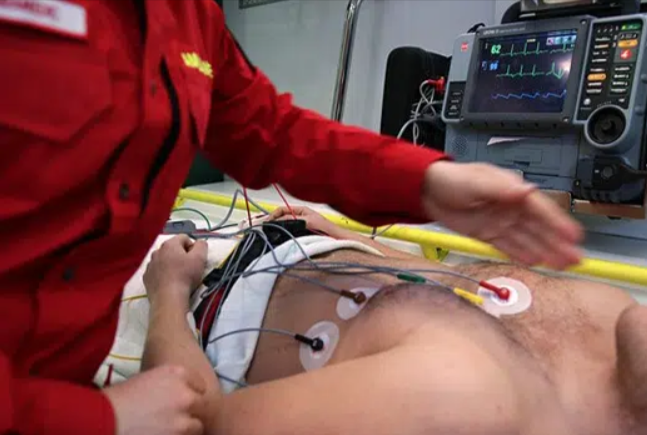
ICU monitors display important information about a patient’s health in real time. Doctors and nurses use these monitors to track vital signs and respond quickly to emergencies.
Main Parameters on an ICU Monitor
Heart Rate (HR)
This indicates the number of heartbeats per minute.
Normal range:
- Adults: 60–100 bpm
Oxygen Saturation (SpO2)
Shows the percentage of oxygen in the blood.
Normal range:
- 95%–100%
Blood Pressure (BP)
Measures the force of blood against artery walls.
Normal range:
- Around 120/80 mmHg
Respiratory Rate (RR)
Indicates the number of breaths taken per minute.
Normal range:
- 12–20 breaths per minute
ECG Waveform
The moving lines on the screen represent the heart’s electrical activity and help identify rhythm abnormalities.
Understanding Alarms
ICU monitors produce alarms when:
- Oxygen levels fall too low
- Heart rate becomes too high or too low
- Blood pressure reaches unsafe levels
Not every alarm indicates a serious emergency, but healthcare professionals investigate each alert.
Important Note
Family members should avoid interpreting monitor readings without medical guidance, as values can vary depending on the patient’s condition and treatment.
Conclusion
An ICU monitor provides continuous information about heart rate, oxygen saturation, blood pressure, and breathing. Understanding basic readings can help family members better understand a patient’s condition.