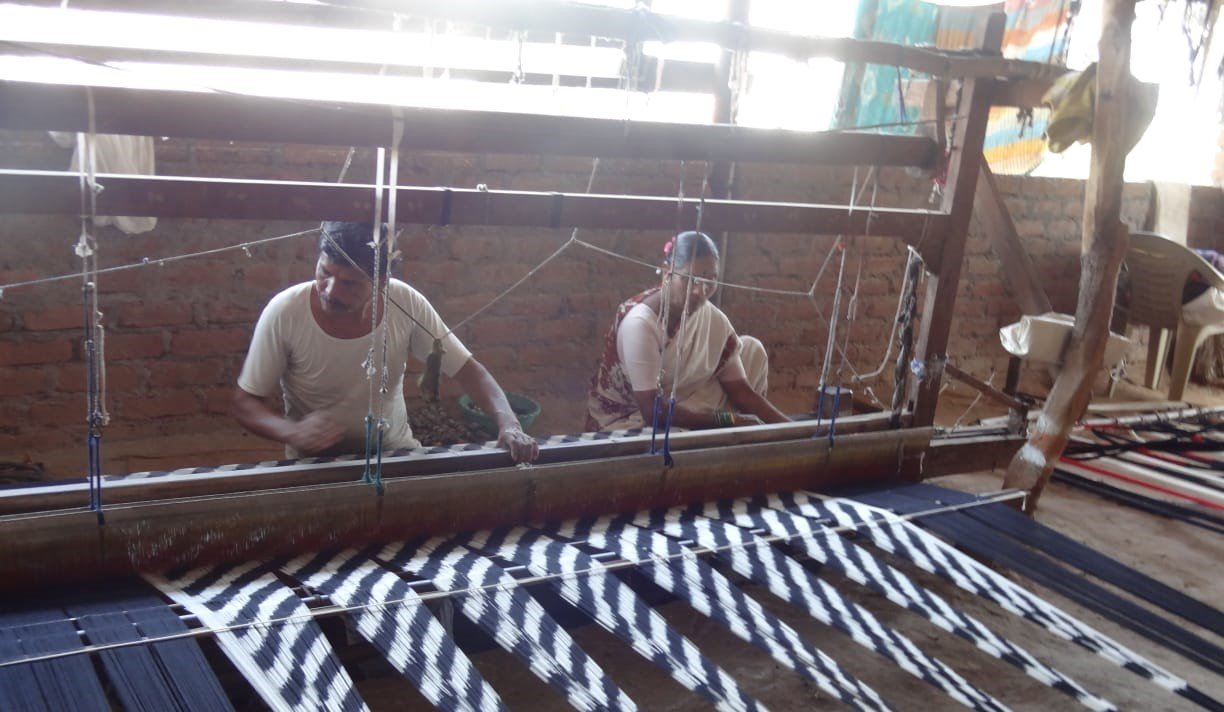
The Padmashali is a Telugu-speaking Hindu caste found in the Indian states of Andhra Pradesh, Tamil Nadu, Karnataka, and Telangana. Initially, their occupation was weaving. Their identity was intertwined with weaving. Later, they adopt the Brahminical status through the process of Sanskritisation.
- Etymology
The name Padmashali derives from Padma, meaning Lotus, and Shali, meaning weaver, underscoring their deep roots in the art of weaving lotus fibers. The word padmashali is interpreted as meaning ‘holder of the lotus’ or ‘lotus weaver’.
Some historical aspects of the Padmashali caste!
- Mythological origin
They claim to be the descendants of Bhrigu Maharshi and Sage Markandeya. It has been believed that Bhavana Rishi was the one who started weaving. Also, the community legends trace the caste’s roots to Bhavana Rishi, a sage with 101 sons. These 101 sons correspond to 101 Gotras, which are required for marriage alliances within the same caste.
- Cultural identity
The community is known for wearing the Yajnopaveetam, a sacred thread, while practicing Vedic rituals, thereby leading to self-designation. Initially, they were divided into two main religious sects: Shaivism and Vaishnavism.
- Cultural practices
The community is known to be non-vegetarian, unlike brahminical traditions. They are associated with the worshipful goddess Shakti.
- Social status with Sanskritization
They were originally classified as Shudras. Later, they underwent Sanskritization, adopting practices of the high castes to enhance their social status. After Sanskritization, many have adopted the sacred thread while performing Vedic rituals.
The Indian government has categorized them as Other Backward Class. However, in some regions of India, they have been considered a forward caste.
- Leaders
Individuals like Pragada Kotaiah and Konda Laxman Bapuji play an important role in the development of the caste. They work a lot to protect the community, along with their traditional skills.
- Geographical area
It is a Hindu caste found in various Indian states, including Andhra Pradesh, Telangana, Maharashtra, Karnataka, Gujarat, and Tamil Nadu.
- Occupation
Historically, their main occupation was the weaving of a wide variety of clothing. But now, their occupation is not just weaving; they have transitioned into modern professions such as engineering, medicine, and IT. However, their heritage is rooted solely in the Handloom industry.
- Classification
The caste is generally classified as an Other Backward Class in various States, such as Telangana and Andhra Pradesh. Also, their classification depends on area to area. They work as a special backward class in Maharashtra.
Modern challenges
In modern times, as demand for traditional handlooms declines amid industrialization, the community faces economic struggles.
However, weaving remains their work, and many community members have made their mark in various fields. They are also benefiting from the reservation class.
Conclusion:
The community has been transformed from its geographical location to its profession and everything in between. They have diversified their careers from engineering to medicine, from politics to manufacturing, and much more. Also, they were once concentrated in Telugu-speaking regions but are now found in other parts of the country, living modern lifestyles.