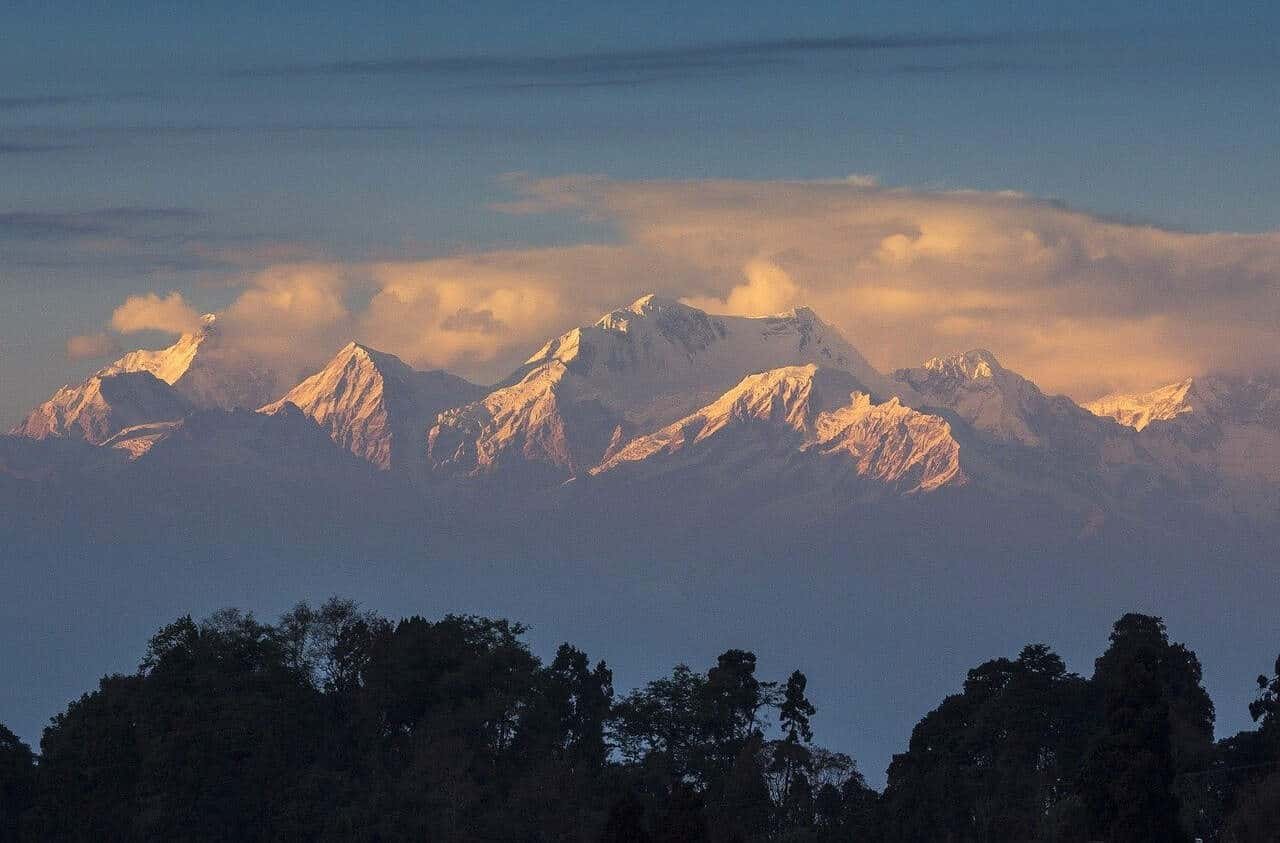
The Himalayas are a marvelous gift from nature. They are not only the tallest mountains but also the youngest ones. The amazing, picturesque and breathtaking beauty of the Himalayas attracts tourists from all across the world. However, not all the tourists conquer the highest peak of the Himalayas, but exploring the valleys, villages and forests of the mountains provides unforgettable experiences to individuals.
Here, let’s get to know about the Top 10 interesting facts about the Himalayan mountains?
- It is the youngest mountain range on Earth.
The Himalayan mountains began forming recently in geological terms, approximately 50 million years ago. Also, the formation process is still ongoing, making it the youngest mountain range on Earth.
- It hosts the world’s tallest peak.
The Himalayan mountain range hosts Mount Everest with a height of 8,848 meters. It is the highest peak on earth, along with other giants like Kangchenjunga and Mount Godwin Austen, calling the people around the world.
- Do you know they are getting taller?
One surprising fact out of the Top 10 interesting facts about the Himalayan mountains is that it has been proven scientifically that the Himalayas are geographically alive. The Indo-Australian plate moves about 20mm per year, increasing its size gradually.
- It is a hotspot of biodiversity.
The Himalayan range is home to some rare species of the animal kingdom because of its unique climate conditions, like the Red Panda, snow leopard and the Himalayan monal, which is the national bird of Nepal.
- A perfect amalgamation of culture and religion
In the Himalayan range, you can find people from various cultures and religions, including Hinduism, Islam, Buddhism and Christianity. You can visit plenty of beautiful Buddhist monasteries in the Himalaya region that captivate the attention of visitors due to their unique culture. Also, there are a prominent number of Hindu pilgrimage sites nestled in the Himalayas, including Amarnath, Kedarnath and Badrinath, providing unique cultural experiences.
- The Himalayas are an abode of snow that never melts.
The term Himalayas refers to an abode of snow because the Himalaya Mountains are covered with ice and snow throughout the year. The upper portion of Mount Everest is the one that never melts. Also, the glaciers present around the mountain range are a reservoir of crystal clear water.
- Sometimes referred to as the Earth’s 3rd pole!
The mountain range is also popularly known as Earth’s 3rd pole because it contains the largest concentration of snow outside of the North or South Poles.
- A perfect source of inspiration for adventure enthusiasts
The destination attracts climbers, trekkers and spiritual enthusiasts across the world to experience an adrenaline rush in their veins.
- The present rivers are older than the peaks.
One surprising fact about the rivers present in these peaks is that they are older than the peaks. The names of these famous rivers are the Ganges, the Indus, and the Brahmaputra, which flow through these peaks.
- They are the architecture of climate conditions.
The Himalayas work as a massive weather barrier. It blocks the cold winds from Central Asia and directs monsoon rains towards India, shaping the climate conditions of the regions.
Conclusion: The living and growing Natural wonder!
Spreading across the five countries named India, Bhutan, China, Nepal and Pakistan, the mountain range is a perfect blend of spiritual, cultural and natural wonders attracting tourists worldwide. In the end, they are not just the mountains; they are filled with lots of wonders and surprising facts, being a lifeline to millions.