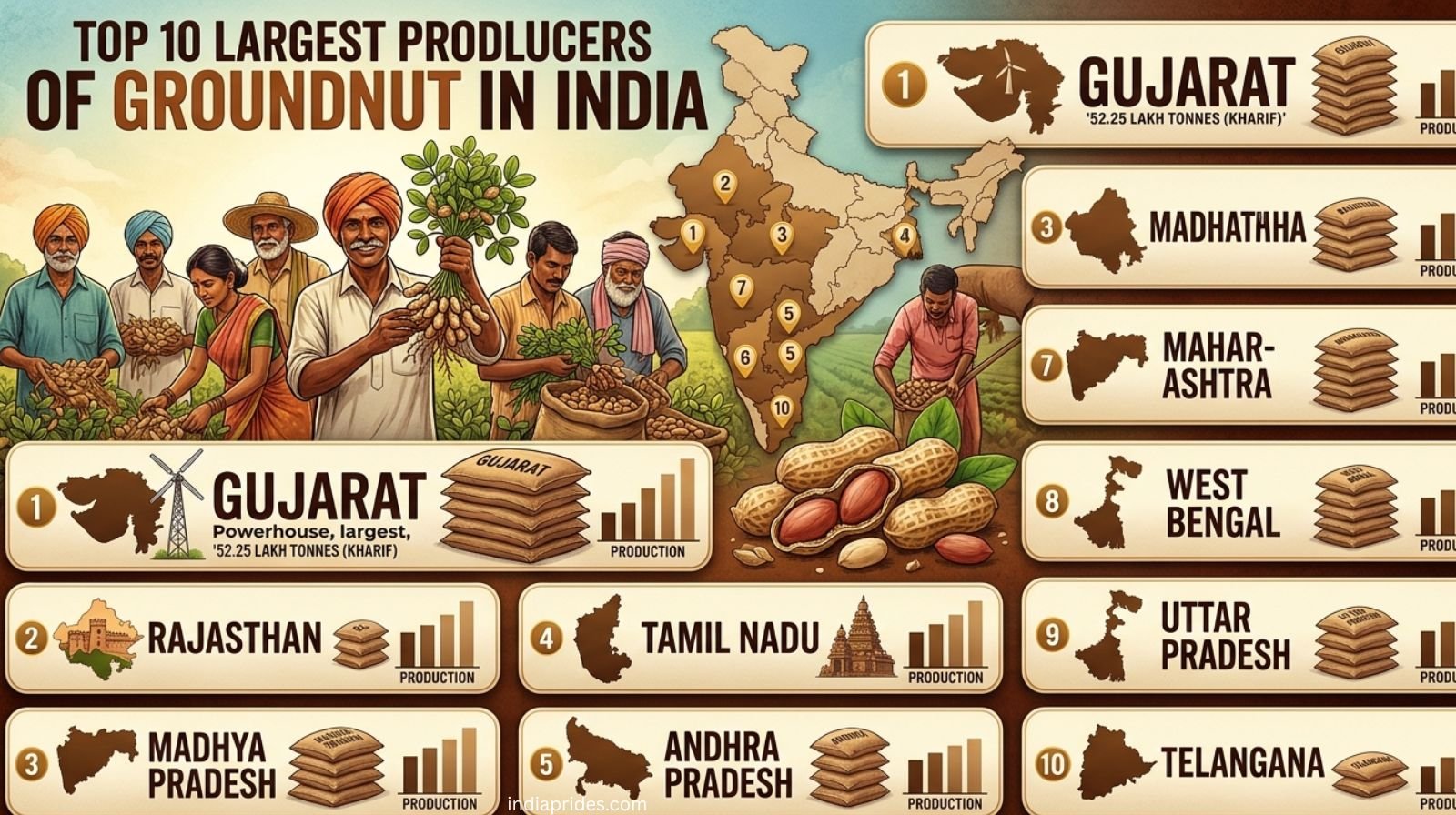
India is a global heavyweight in the agricultural sector, and groundnut (also known as the peanut) is one of its most prized commodities. From the savory snacks in our homes to the essential oils in our kitchens, groundnuts are indispensable. As of 2026, India stands as the world’s second-largest producer of this “golden nut,” driven by the hard work of farmers across diverse climatic zones.
The groundnut is not just a crop; it is a source of protein, healthy fats, and livelihood for millions. In this exhaustive guide, we explore the top 10 largest producers of groundnut in India, highlighting the states that dominate the harvest and the factors that make them agricultural leaders. If you are looking for the largest producer of groundnut in India, this list will provide every detail you need.
1. Gujarat: The Undisputed Leader
When discussing the largest producer of groundnut in India, Gujarat consistently claims the top spot. The state’s agro-climatic conditions are perfect for high-yield groundnut cultivation.
- Massive Production: Gujarat accounts for over 45% to 50% of India’s total groundnut output.
- Key Regions: Districts like Junagadh, Rajkot, Jamnagar, and Amreli are the core hubs of production.
- Yield Quality: The state is famous for its high-quality bold seeds and HPS (Hand Picked Selected) varieties that are in high demand globally.
- Technological Edge: Gujarat’s farmers utilize advanced irrigation techniques and high-yielding seed varieties, ensuring consistent growth even in semi-arid zones.
2. Rajasthan: The Rising Star
Rajasthan has witnessed a dramatic shift in its agricultural landscape. Once a desert-heavy state, it has now become a major largest producer of groundnut in India competitor.
- Bikaner Hub: The city of Bikaner is often referred to as the “Groundnut Capital” of the north.
- Irrigation Impact: The Indira Gandhi Canal has been a game-changer, providing the necessary water to transform sandy soils into fertile groundnut fields.
- Production Surge: Rajasthan contributes nearly 18% to 20% of the national harvest.
- Climate Resilience: Rajasthan’s varieties are specifically bred to withstand high temperatures and lower rainfall.
3. Tamil Nadu: The Southern Powerhouse
Tamil Nadu is a vital player in the groundnut industry, particularly for its year-round production cycles.
- Dual Seasons: The state harvests groundnut in both the Kharif and Rabi seasons, ensuring a steady supply to the market.
- Oil Extraction: A significant portion of Tamil Nadu’s groundnut is used for the production of high-grade groundnut oil, a staple in Southern Indian cuisine.
- Top Districts: Vellore, Thiruvannamalai, and Villupuram are the leading districts for groundnut cultivation.
4. Andhra Pradesh: The High-Yield Zone
Andhra Pradesh has traditionally been a leader in oilseeds, and groundnut remains its primary focus in the Rayalaseema region.
- Rayalaseema Belt: Districts like Anantapur have historically dedicated massive acreage to groundnut, although the state is now focusing more on improving yield per hectare.
- Research Centers: The state is home to several agricultural research stations that focus on developing drought-resistant groundnut strains.
- Economic Impact: Groundnut farming provides the primary source of income for thousands of small-scale farmers in the state’s rain-fed areas.
5. Karnataka: Diverse and Diligent
Karnataka’s diverse geography allows it to produce a variety of groundnut types, from the small Spanish varieties to the larger Virginia types.
- Production Pockets: The northern parts of Karnataka, including Dharwad and Belgaum, are the primary contributors.
- Technological Adoption: Karnataka is a leader in adopting integrated pest management (IPM), which ensures a healthier and more organic-compliant harvest.
- Value Addition: The state has a robust network of processing units that convert raw groundnuts into butter, snacks, and refined oil.
6. Madhya Pradesh: The Central Contributor
Madhya Pradesh is rapidly diversifying its oilseed portfolio, and groundnut has become a key part of its “Rabi” success story.
- Fertile Soils: The black cotton soil in certain regions of MP provides excellent moisture retention for groundnut roots.
- Growth Trend: Over the last five years, MP has seen a steady 10% year-on-year growth in groundnut acreage.
- Khargone and Dhar: These districts have emerged as the leading producers within the state.
7. Maharashtra: Quality and Innovation
Maharashtra’s groundnut production is concentrated in the Vidarbha and Khandesh regions.
- Summer Groundnut: Maharashtra is one of the few states that has successfully popularized “Summer Groundnut,” which is grown under irrigation and yields higher quality pods.
- Processing Hubs: Cities like Jalgaon serve as major trade centers for groundnuts, connecting farmers to national markets.
- Organic Movement: There is a growing trend among Maharashtrian farmers toward organic groundnut cultivation to meet export standards.
8. Telangana: Emerging Strength
Since its formation, Telangana has focused heavily on “Oilseed Missions,” significantly boosting its groundnut output.
- Government Support: The state government provides subsidies for micro-irrigation, which is crucial for groundnut success.
- Focus on Yield: While the acreage is smaller than Gujarat, the yield per hectare in Telangana is among the most competitive in the country.
9. West Bengal: The Eastern Front
West Bengal proves that groundnut isn’t just a dry-zone crop. The state’s alluvial soil offers a different but productive environment.
- Rabi Crop: In West Bengal, groundnut is primarily grown as a Rabi crop after the paddy harvest.
- Direct Consumption: A large portion of the produce is used for the snack industry and direct consumption rather than oil extraction.
10. Uttar Pradesh: Northern Contribution
Uttar Pradesh completes our list, with its western and southern regions contributing to the national pool.
- Bundelkhand Region: The dry, rocky terrain of Bundelkhand is surprisingly suited for groundnut, providing a much-needed cash crop for local farmers.
- Market Potential: Given its massive population, UP is also one of the largest consumers of the groundnuts it produces.
Why India Dominates Groundnut Production
The success of any largest producer of groundnut in India is built on three pillars:
- Ideal Climate: Groundnut thrives in tropical and sub-tropical climates with temperatures between 25°C and 30°C.
- Soil Variety: From the sandy loams of Rajasthan to the black soils of Gujarat, India offers the perfect “bed” for these pods to grow underground.
- Two-Crop Cycle: India is one of the few countries that can harvest groundnut twice a year, thanks to the Kharif (Monsoon) and Rabi (Winter) cycles.
Health Benefits: Why We Love Groundnuts
Being a fan of the largest producer of groundnut in India isn’t just about the economy; it’s about health!
- Rich in Protein: Groundnuts contain more protein than many expensive nuts like walnuts or cashews.
- Heart Healthy: They are packed with monounsaturated fats that help lower bad cholesterol.
- Skin Glow: High levels of Vitamin E and Zinc help maintain healthy, glowing skin.
Conclusion
The groundnut industry is a glowing example of India’s agricultural prowess. While Gujarat remains the undisputed largest producer of groundnut in India, the collective efforts of states like Rajasthan, Tamil Nadu, and Andhra Pradesh ensure that the nation remains a global leader. As technology improves and climate-resilient seeds become common, the “Golden Nut” will continue to provide health to consumers and wealth to the nation’s farmers.