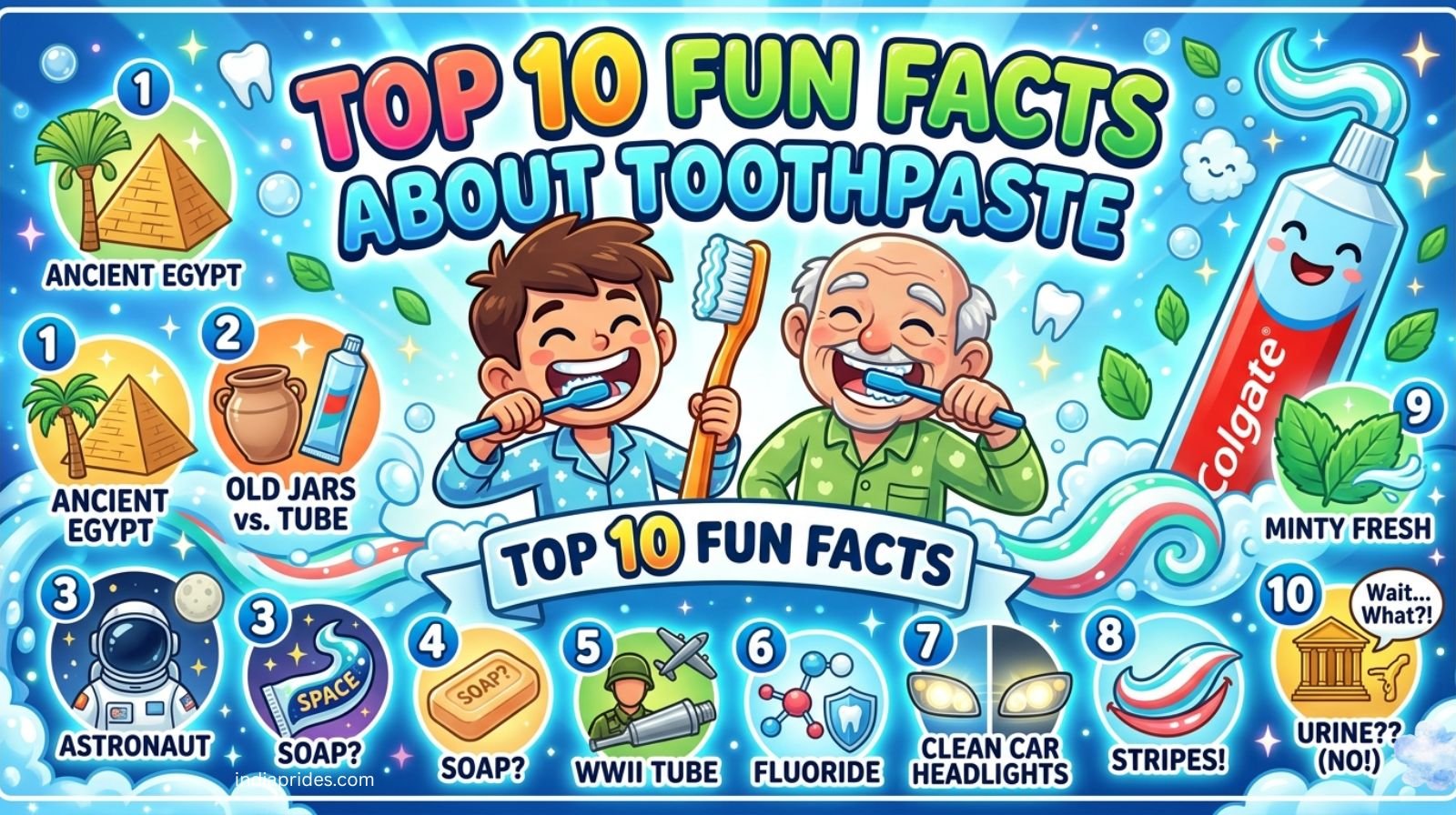
We use it every single morning and every single night. It is the minty guardian of our pearly whites and the first thing we reach for to start our day. Yet, most of us treat toothpaste as a mundane necessity rather than the scientific and historical marvel it actually is. Did you know that before the squeaky-clean tubes we see in stores today, people used everything from crushed bones to burnt eggshells to clean their teeth?
In this comprehensive guide, we are squeezing out the top 10 fun facts about toothpaste. We will explore its bizarre origins, the secret chemistry behind the stripes, and its surprising uses outside the bathroom. These fun facts about toothpaste are designed to give you a fresh perspective on your daily oral hygiene routine.
1. The Gross Ingredients of Ancient “Pastes”
Long before the invention of fluoride and mint flavoring, ancient civilizations were desperate to keep their teeth clean. However, their recipes were a bit more “hardcore” than ours.
- Ancient Egyptians: Around 5000 BC, they used a powder made of ox hooves, ashes, and burnt eggshells.
- Greeks and Romans: They preferred a more abrasive approach, often adding crushed bones and oyster shells to their mixtures.
- The “Liquid” Version: Some Roman physicians even recommended rinsing with human urine because the ammonia was believed to whiten teeth. We’ve certainly come a long way!
2. Toothpaste Used to Come in Jars (and Bread!)
The convenient plastic tube we know today is a relatively modern invention. For most of the 1800s, tooth soap and powders were the standard.
- Ceramic Jars: Early commercial toothpastes were sold in small porcelain pots. You had to dip your brush directly into the jar, which wasn’t exactly hygienic for a whole family.
- The “Bread” Method: Some early “pastes” were actually more like a hard charcoal-based bread that you would scrub against your teeth.
- The Tube Revolution: In 1892, Dr. Washington Sheffield noticed painters using collapsible metal tubes for their oils. He realized this would be the perfect way to dispense “Crème Dentifrice” without the mess.
3. The Secret Behind the Colorful Stripes
Have you ever wondered how the red, white, and blue stripes stay so perfectly separated inside the tube? This is one of the most intriguing fun facts about toothpaste involving fluid dynamics.
- Laminar Flow: The different colored pastes have almost identical viscosity and density. This prevents them from mixing inside the tube.
- The Nozzle Magic: The stripes aren’t mixed throughout the whole tube. Instead, the main white paste is at the bottom, and the colored gels are near the top in separate compartments that meet only at the nozzle.
- Marketing History: Originally, the stripes were added in the 1970s to show that the paste had multiple benefits—white for cleaning and blue/red for breath freshening and gum health.
4. It Can Actually “Burn” Your Mouth
If you’ve ever felt a stinging sensation while brushing, it’s not just the mint. It is usually a chemical reaction caused by a common foaming agent.
- Sodium Lauryl Sulfate (SLS): This is the ingredient responsible for the bubbles. While it helps spread the paste, it can also irritate sensitive tissues.
- Canker Sores: Many dentists recommend SLS-free toothpaste for people prone to mouth ulcers, as the foaming agent can strip away the protective lining of the mouth.
- The “Orange Juice” Effect: Ever wonder why juice tastes terrible after brushing? SLS suppresses your “sweet” taste receptors and destroys phospholipids that usually dampen “bitter” flavors!
5. Astronauts Have Special “Edible” Toothpaste
When you are in zero gravity, you can’t exactly lean over a sink and spit. This led to some very creative NASA innovations regarding fun facts about toothpaste in space.
- The Spitting Problem: In microgravity, water and paste would float away in dangerous blobs.
- NASAdent: Scientists developed a fully edible, non-foaming toothpaste. Astronauts simply brush their teeth and swallow the paste.
- Health Benefits: Because it’s designed to be ingested, it contains no harsh chemicals, making it a favorite for toddlers who haven’t learned to spit yet!
6. Toothpaste is a Hidden “Silverware” Polish
The same abrasives that remove plaque from your enamel are also incredible at removing tarnish from precious metals.
- Fine Abrasives: Most pastes contain hydrated silica or calcium carbonate. These are hard enough to scrub off dirt but soft enough not to scratch the surface.
- The Hack: If you have a tarnished silver ring or spoon, a tiny bit of non-gel toothpaste and a soft cloth will bring back the shine in seconds.
- Jewelry Warning: Don’t use it on pearls or soft gemstones, as the abrasives can damage their delicate finish!
7. It Was Once a Luxury for the Elite
For a long time, having clean teeth was a status symbol. Before mass production, only the wealthy could afford the ingredients for a tooth-cleaning regimen.
- Hand-Mixed: Chemists used to mix custom powders for wealthy clients, often adding expensive spices like cinnamon or cloves to mask bad breath.
- The Sugar Irony: Ironically, as sugar became cheaper and more available to the masses, tooth decay skyrocketed, making the need for affordable toothpaste a public health crisis.
- WWII Impact: It wasn’t until World War II, when soldiers were required to brush their teeth as part of their daily kit, that the habit became truly universal among the general public.
8. Not All Toothpastes Contain Fluoride
While fluoride is the “gold standard” for preventing cavities, it wasn’t added to toothpaste until the mid-20th century.
- The Discovery: Scientists noticed that people living in areas with naturally fluoridated water had significantly fewer cavities.
- The Launch: The first fluoride toothpaste, Crest, was launched in 1955 after years of clinical trials.
- Natural Alternatives: Today, there is a massive market for charcoal toothpaste, neem-based pastes, and hydroxyapatite versions for those looking for fluoride-free options.
9. It Can Help Clear Up a Pimple (Sort Of)
One of the most popular “home remedies” involves dabbing a bit of toothpaste on a blemish. But does it actually work?
- Drying Agents: Toothpaste contains baking soda, alcohol, and hydrogen peroxide, which can indeed dry out a pimple quickly.
- The Risk: However, the menthol and other flavorings can severely irritate the skin, often causing more redness than the pimple itself.
- The Verdict: Modern dermatologists suggest sticking to actual acne medication, but in a “fashion emergency,” this is one of those fun facts about toothpaste that remains a legendary quick fix.
10. The Most Expensive Toothpaste Costs $100 Per Tube
If you think your $5 tube is pricey, you haven’t seen Theodent 300. This ultra-luxury brand turns oral care into a high-end experience.
- Rennou: Instead of fluoride, it uses a patented extract from cocoa beans (yes, chocolate!) to strengthen enamel.
- Gold Packaging: The tube itself is designed to look like a piece of high-end jewelry.
- Clinical Strength: While it sounds like a gimmick, the science suggests that the cocoa extract is actually more effective at hardening enamel than traditional fluoride.
Why Toothpaste Matters in 2026
In 2026, we are seeing a revolution in sustainable packaging. Many brands are moving away from plastic tubes toward toothpaste tablets and compostable materials. Understanding these fun facts about toothpaste helps us appreciate how much technology is packed into such a small squeeze.
As we move toward a more eco-conscious world, the “paste” itself is becoming more natural, with probiotic additives designed to balance the “good bacteria” in your mouth rather than just killing everything in sight.
Conclusion
From Roman urine to chocolate-based luxury gels, the history of toothpaste is as colorful as the stripes on your brush. These top 10 facts prove that even the most “boring” parts of our morning can be filled with wonder. The next time you brush, remember: you’re not just cleaning your teeth; you’re participating in a 7,000-year-old tradition of human ingenuity.