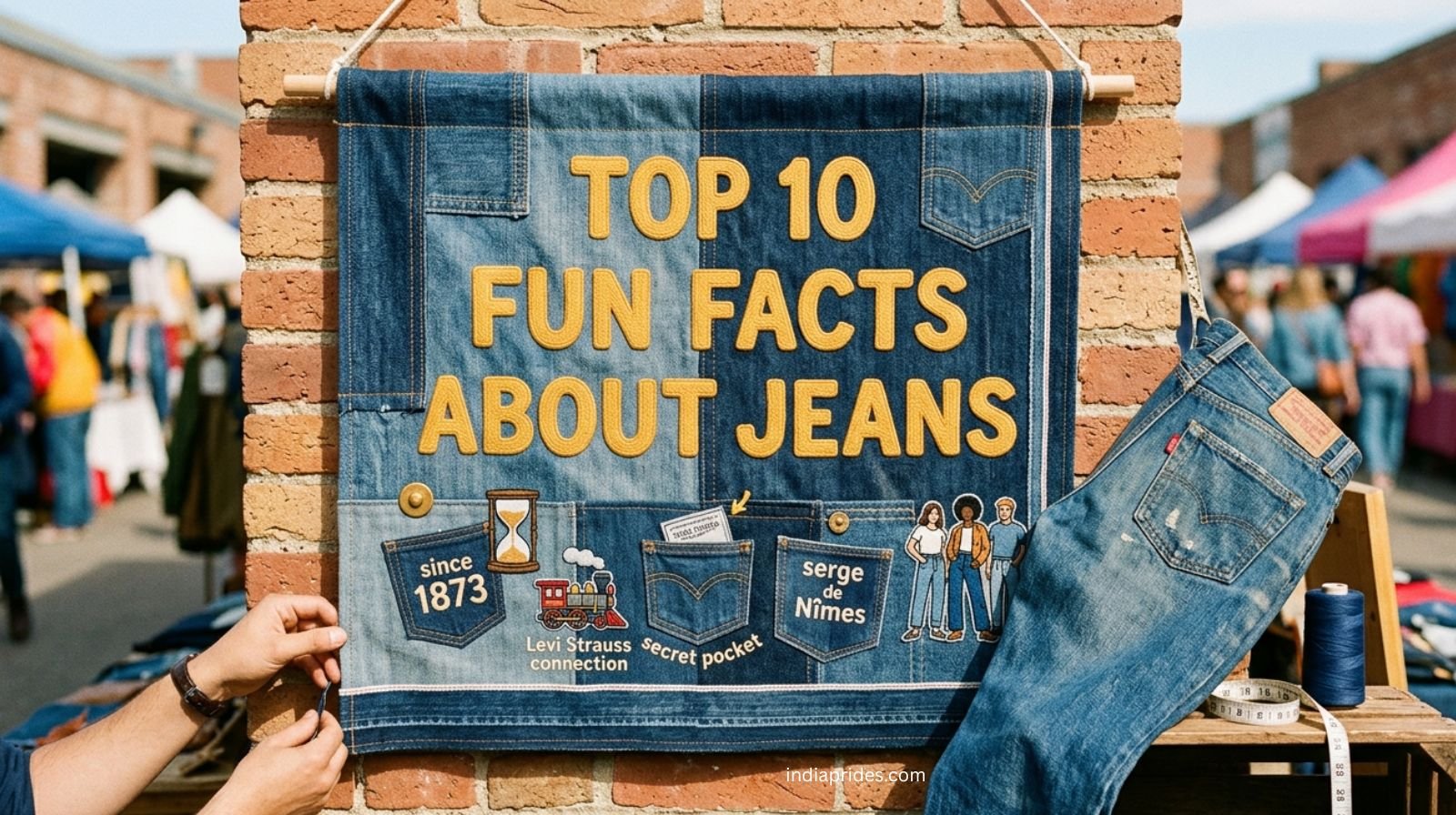
In the fast-moving fashion world of 2026, trends come and go with the click of a button, but one garment remains the undisputed king of the closet: denim jeans. They have survived the gold rush, the disco era, the grunge movement, and the rise of sustainable fashion.
Whether you are rocking a pair of vintage high-waisted jeans, modern eco-friendly denim, or classic slim-fit styles, you are wearing a piece of history. But how much do you actually know about the fabric that covers the world? From secret pockets to orange thread, here are the top 10 fun facts about jeans that will make you look at your favorite pair in a whole new light.
1. The “Tiny Pocket” Had a Very Specific Purpose
Have you ever wondered why your jeans have that miniature fifth pocket inside the front right pocket? In 2026, we might use it for a single earbud or a coin, but its origin is much more mechanical.
- The Watch Pocket: In the late 1800s, cowboys and miners carried pocket watches. This tiny compartment was designed to keep the delicate timepiece snug and safe from scratches during rugged labor.
- Levi’s Legacy: Levi Strauss officially introduced this feature in their first waist overalls.
- Design Survival: Even though pocket watches are now museum pieces, the pocket remains a signature element of authentic denim design.
2. “Denim” and “Jeans” Are Named After European Cities
Though we think of jeans as purely American, their names are a linguistic road trip through Europe.
- De Nîmes: The word “denim” comes from the French phrase serge de Nîmes, referring to a sturdy fabric from the city of Nîmes.
- Genoa: The word “jeans” actually comes from the Italian city of Genoa. The sailors there wore sturdy cotton trousers that the French called bleu de Gênes (Genoese blue), which eventually morphed into “jeans.”
- Global Fusion: American entrepreneurship took French fabric and Italian style to create a global fashion revolution.
3. Those Tiny Copper Rivets Saved the Industry
The little metal circles at the corners of your pockets aren’t just for decoration; they are structural geniuses.
- The Problem: Miners in the 1870s complained that their pockets ripped off under the weight of heavy tools and gold nuggets.
- The Solution: A tailor named Jacob Davis came up with the idea to use copper rivets to reinforce the stress points.
- The Patent: Unable to afford the patent alone, he partnered with Levi Strauss in 1873. This “Birth of the Blue Jean” changed workwear durability forever.
4. Why Indigo? It’s All About the Chemistry
Denim is traditionally dyed with indigo, and there is a functional reason why the color only sits on the surface.
- Surface Dyeing: Unlike other fabrics where the dye soaks through, indigo molecules only “stick” to the outside of the yarn.
- The Fade Factor: As the fabric is rubbed or washed, the dye chips off, revealing the white core. This creates the unique fades and “whiskers” that denim enthusiasts crave.
- Natural Origins: Originally, indigo was derived from plants (Indigofera tinctoria), making it one of the oldest natural dyes used in clothing.
5. Jeans Were Once Banned in Schools and Theaters
It’s hard to believe in 2026, but wearing jeans was once seen as an act of open rebellion.
- The “Rebel Without a Cause” Effect: In the 1950s, stars like James Dean and Marlon Brando made jeans the uniform of the “bad boy.”
- Banned Status: Many schools in the US and UK banned students from wearing denim, fearing it promoted juvenile delinquency.
- From Work to Wardrobe: This ban only made jeans more popular, cementing them as the ultimate symbol of youth counterculture.
6. One Bale of Cotton Can Make 325 Pairs of Jeans
The efficiency of denim production is staggering. When we talk about denim manufacturing, cotton is the undisputed hero.
- The Math: A single 500-pound bale of cotton can produce roughly 325 pairs of jeans.
- Resource Management: In 2026, the industry is focusing on organic cotton and recycled fibers to ensure this high output doesn’t harm the planet.
- The Thread Count: It takes approximately six miles of cotton thread to make just one pair of classic blue jeans!
7. The “Orange Thread” is a Trademark Secret
Ever noticed that most blue jeans use a specific shade of orange or copper-colored thread?
- Color Contrast: Levi Strauss originally used orange thread to match the copper rivets. It became a visual hallmark of the brand.
- Counterfeit Protection: The specific stitching patterns and thread colors were early forms of brand protection to distinguish real denim from cheap imitations.
- Modern Aesthetic: Today, the orange-on-blue look is a staple of classic Americana style.
8. 2026 Focus: The Rise of “Dry” or Raw Denim
True denim-heads avoid washing their jeans for months—and there is a method to the madness.
- Raw Denim: This is denim that hasn’t been pre-washed or “distressed” at the factory.
- Personalized Fit: By wearing raw denim without washing it, the fabric molds to your body shape and creates creases exactly where you move.
- Eco-Benefits: Less washing means a lower water footprint, making this a favorite trend for sustainable fashion advocates.
9. The World’s Most Expensive Jeans Cost Over $1 Million
Denim isn’t always affordable workwear. Some pairs are literal investments.
- The Secret Circus: A pair of “Secret Circus” jeans was once valued at $1.3 million due to high-quality diamonds sewn into the back pockets.
- Vintage Gold: An original pair of Levi’s from the 1880s was recently sold at auction for over $80,000, proving that vintage denim is as valuable as fine art.
- Luxury Denim: High-end brands now use Japanese Selvedge denim, woven on old-school looms, which can cost hundreds of dollars per yard.
10. The Future is Green: Circular Denim
In 2026, the most interesting fact about jeans is where they go when you’re done with them.
- Biodegradability: New tech allows for stretch denim made without plastic-based elastane, meaning your jeans can eventually compost.
- Recycled Content: Many brands now use 20-30% recycled denim from old jeans to create new ones, closing the loop on waste.
- Laser Distressing: Instead of using harmful chemicals and stones to “age” jeans, factories now use lasers to burn patterns and fades into the fabric safely.
Conclusion: More Than Just Fabric
Jeans are a reflection of our history, our struggles, and our style. From the silver screen to the gold mines, denim has been the fabric of the people for over 150 years.
Next time you pull on your favorite pair, remember: you aren’t just wearing pants. You’re wearing Jacob Davis’s rivets, French craftsmanship, and a global sustainability movement. Denim is the ultimate survivor, and in 2026, it’s looking better than ever.
Frequently Asked Questions (FAQs)
Q: How often should I wash my jeans in 2026?
A: To preserve the color and fabric, experts recommend washing them only when they are actually dirty or every 10-15 wears. Use cold water and air dry them!
Q: What is Selvedge denim?
A: Selvedge (self-edge) refers to denim woven on traditional shuttle looms. It features a clean, finished edge (often with a red stripe) that prevents the fabric from unravelling.
Q: Is denim eco-friendly?
A: It’s getting there! Look for brands using BCI cotton (Better Cotton Initiative), water-less dyeing techniques, and recycled denim programs.