When you think of South Asian travel, your mind might immediately go to the Taj Mahal or the beaches of Bali.
However, nestled between India and Myanmar lies a hidden gem that is breaking records,
defying expectations, and captivating the hearts of those who visit. Bangladesh is a land of vibrant colors, deep-root history, and a geography that feels like it was carve by the gods of water themselves.
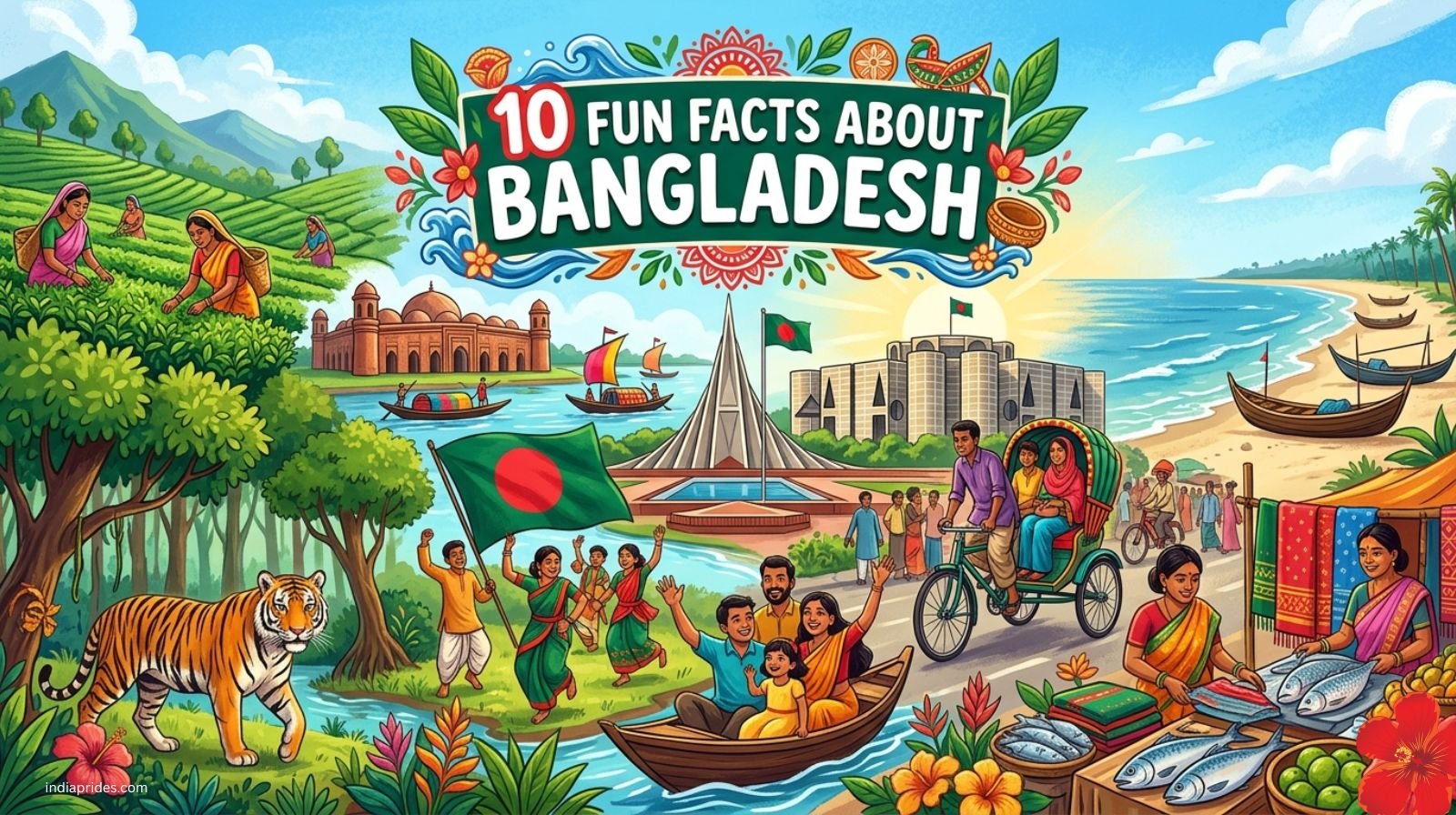
In this ultimate guide, we are diving into the top 10 fun facts about Bangladesh that showcase why this nation is one of the most underrated destinations on the planet. From world records to unique cultural sacrifices, this is the Bangladesh you never knew exist.
1. The World’s Longest Natural Sea Beach
If you are a fan of endless horizons and the sound of crashing waves, Cox’s Bazar is your paradise. It isn’t just a beautiful coastline;
it holds the title of the longest natural uninterrupted sandy sea beach in the world.
- The Scale: Stretching over 120 kilometers (75 miles), you could walk for days without ever leaving the sand.
- Local Flavor: Unlike the commercialized beaches of the West, Cox’s Bazar offers a mix of bustling fish markets and serene, untouched patches like Inani Beach.
- A Surfer’s Secret: While still developing, the surfing scene here is growing, offering a unique “off the beaten path” experience for adventure travelers.
2. Home to the “King of the Jungle”
While many countries claim a connection to wildlife, Bangladesh is the primary guardian of the Royal Bengal Tiger. These majestic creatures roam the Sundarbans, which is the largest mangrove forest on Earth.
- UNESCO Heritage: The Sundarbans is a UNESCO World Heritage Site and a complex ecosystem of tidal waterways and mudflats.
- Swimming Tigers: Interestingly, the tigers here are known to be excellent swimmers, often crossing wide rivers to hunt or patrol their territory.
- Natural Buffer: This massive forest isn’t just for show; it acts as a vital natural shield for the country against cyclones and rising sea levels.
3. The “Land of Rivers” is Literally Changing
Bangladesh is often call the “Land of Rivers,” and for a very good reason. There are approximately 700 rivers flowing through the country, creating the largest river delta in the world.
- Dynamic Geography: Because of the silt brought down by the Ganges and Brahmaputra, new islands called “Chars” are constantly appearing and disappearing in the rivers.
- Life on Water: Millions of people live on these shifting lands, showcasing the incredible resilience of the Bangladeshi people.
- River Rights: In a landmark legal move, the Bangladeshi Supreme Court granted legal personhood to all its rivers to protect them from pollution, giving nature the same rights as a human being.
4. A Language People Literally Died For
Most countries celebrate their independence, but Bangladesh is unique because its identity is fundamentally tied to its mother tongue, Bangla.
- The 1952 Movement: In 1952, students in Dhaka sacrificed their lives protesting for the right to speak Bangla as an official language.
- Global Impact: This sacrifice was so significant that UNESCO declared February 21st as International Mother Language Day, observed worldwide to promote linguistic diversity.
- Cultural Pride: For a Bangladeshi, the language isn’t just a tool for communication; it is a symbol of national survival and pride.
5. The Rickshaw Capital of the World
If you visit the capital city, Dhaka, you will witness a kaleidoscope of color in the form of cycle rickshaws. Dhaka is officially recognized as the Rickshaw Capital of the World.
- Moving Art: These aren’t just vehicles; they are canvases. Rickshaw art is a recognized folk-art form, featuring hand-painted depictions of movie stars, landscapes, and religious motifs.
- The Numbers: There are estimate to be over 600,000 rickshaws in the city, providing a livelihood for millions and a slow-motion way to soak in the city’s chaotic beauty.
- Eco-Friendly Travel: In an age of carbon footprints, these human-powered vehicles remain one of the greenest ways to navigate a mega-city.
6. Six Seasons Instead of Four
While the rest of the world sticks to the standard four seasons,
the Bengali Calendar recognizes six distinct seasons (Ritus), each lasting two months.
- The Lineup: Summer (Grishma), Monsoon (Barsha), Autumn (Sarat), Late Autumn (Hemanta), Winter (Sheet), and Spring (Basanta).
- Late Autumn Magic: The season of Hemanta is particularly love, as it is the time of harvest and the arrival of “Pitha” (delicious traditional rice cakes).
- Agricultural Rhythm: This six-season cycle is deeply intertwined with Bangladesh’s agriculture, dictating when crops are sown and when festivals are celebrated.
7. A Tea Lover’s Paradise in Sylhet
If you think of tea and only picture Sri Lanka or India, you are missing out. The Sylhet region of Bangladesh is home to some of the most stunning tea gardens in the world.
- Sreemangal: Known as the “Tea Capital,” this area features rolling green hills that look like they’ve been draped in velvet.
- The 7-Layer Tea: A must-try for any tourist is the famous 7-layer tea, where different types of tea and milk are layer in a single glass without mixing.
- Rainforest Neighbors: These tea gardens often border lush rainforests like Lawachara National Park, where you can find the rare Western Hoolock Gibbon.
8. One of the Least Obese Countries in the World
In a world struggling with health crises, Bangladesh consistently ranks as one of the least obese nations. This is largely attributed to the Bangladeshi diet and lifestyle.
- Rice and Fish: The staple diet consists of fresh river fish (Hilsa is the national favorite) and rice, supplemented by a massive variety of lentils and vegetables.
- Active Lifestyle: Despite rapid urbanization, a large portion of the population is involve in agriculture and manual labor, keeping the nation physically active.
- Spicy Metabolism: The heavy use of fresh chilies and turmeric in Bengali cuisine isn’t just about flavor—it has numerous health benefits too!
9. A Cricket-Crazy Nation
If you want to see the true spirit of Bangladesh, attend a cricket match. In this country, cricket isn’t just a sport; it is a national religion.
- The Tigers: The national team, known as the Tigers, has become a giant-killer in international cricket, sparking massive street celebrations with every victory.
- Unity: During a big match, the entire country of 170 million people comes to a standstill. Shops close, traffic thins, and everyone huddles around a screen.
- Atmosphere: The fans at the Sher-e-Bangla National Cricket Stadium are widely consider some of the loudest and most passionate in the sporting world.
10. The Most Densely Populated “Large” Country
Bangladesh fits a staggering amount of life into a relatively small space. It is the most densely populated country in the world (excluding microstates like Singapore or Monaco).
- Human Connection: With over 170 million people in a space roughly the size of Iowa, you are never truly alone. This has fostered a culture of extreme hospitality and community.
- Urban Vitality: Cities like Dhaka are centers of incredible entrepreneurship and energy, where every square inch of space is use creatively.
- Resilience: Managing such a large population amidst environmental challenges has made Bangladesh a world leader in disaster management and grassroots development.
Why You Should Visit Bangladesh in 2026
Bangladesh is a country that rewards the curious. It isn’t a place for those seeking “cookie-cutter” luxury;
it is a place for those who want to see humanity at its most vibrant. Whether it is the textile heritage of the Jamdani saree or the ancient Buddhist ruins of Paharpur,
there is a story waiting at every corner.
Conclusion
These fun facts about Bangladesh only scratch the surface of this magnificent delta. It is a nation define by its water, its language, and its unbreakable spirit. If you are looking for your next big adventure, look no further than the “Green Emerald” of South Asia.