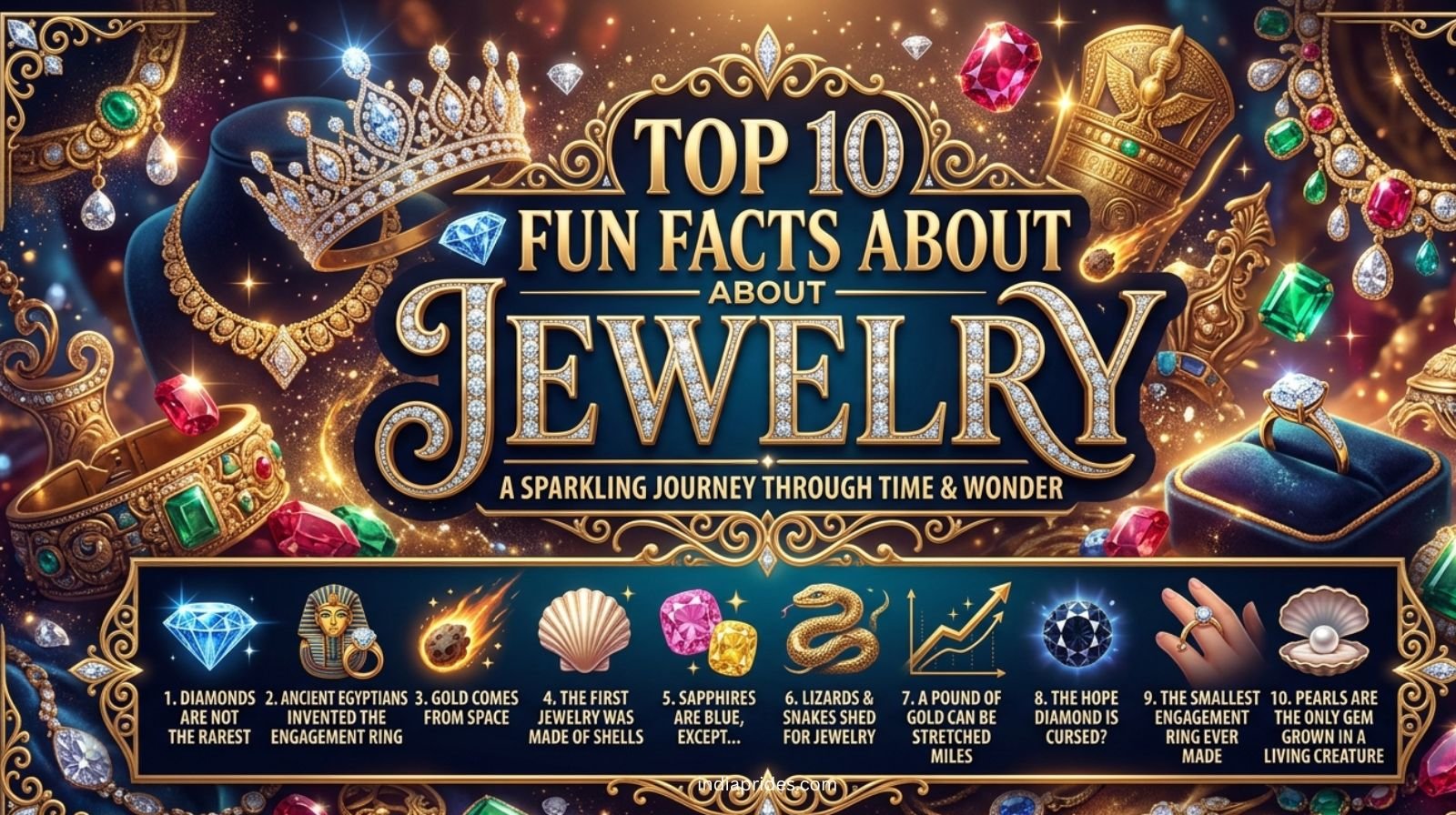
Jewelry is more than just a shimmering accessory; it is a timeless testament to human culture, a silent storyteller of our history, and a marvel of geological science. In 2026, as we witness a surge in sculptural minimalism and lab-grown diamond technology, our fascination with “bling” has reached an all-time high. From the deep mantle of the Earth to the high-fashion runways of Milan, every gemstone and metal carries a secret.
Whether you are a collector of antique gold or a fan of modern silver stacks, these insights will transform how you perceive the treasures in your jewelry box. Prepare to be enchant by the Top 10 fun facts about jewelry that prove the most beautiful things in life often have the most incredible backstories.
1. Most Diamonds Are Billions of Years Old
Every time you look at a diamond, you are looking at a piece of the Earth’s ancient history. Most natural diamonds were form between 1 to 3.5 billion years ago.
- The Process: They were forge under intense heat and pressure roughly 100 miles below the Earth’s surface.
- The Journey: These stones were brought to the surface by deep-seated volcanic eruptions millions of years ago.
- Fun Fact: When you wear a diamond, you are literally wearing a “time capsule” that predates the dinosaurs!
2. Gold is Literally “Out of This World”
Scientists believe that almost all the gold found on Earth arrived here via meteorite impacts that occurred billions of years ago.
- Stellar Origin: Gold is not “made” on Earth; it is created in the heart of dying stars during supernova explosions or the collision of neutron stars.
- Earth’s Core: Most of the planet’s original gold sank to the core during formation. The gold we mine today was deliver by a cosmic “mail service” of space rocks.
- Keyword Insight: This makes gold jewelry one of the few things you can own that is truly extraterrestrial.
3. The “Mona Lisa” of Jewelry: The Hope Diamond’s Blue Mystery
The Hope Diamond is arguably the most famous piece of jewelry in the world, not just for its 45.52-carat size, but for its rare deep-blue color and legendary “curse.”
- The Science: The blue hue is cause by trace amounts of the element boron trap in the crystal structure.
- The Glow: Under short-wave ultraviolet light, the Hope Diamond glows a fiery blood red, a phenomenon that add to the myths of it being “haunte” or curse.
- 2026 Perspective: Today, it is value at over $250 million, though it is officially consider “priceless.”
4. Pearls are the Only Gemstones Made by Living Creatures
While diamonds and rubies are minerals form in the Earth, pearls are organic. They are create inside the shells of mollusks like oysters and mussels.
- Self-Defense: A pearl begins when an irritant (like a grain of sand or a parasite) enters the shell. The mollusk coats it in layers of nacre (mother-of-pearl) to protect itself.
- The Cocktail Legend: It is said that Cleopatra once dissolved a priceless pearl in vinegar and drank it just to win a bet with Mark Antony about who could host the most expensive dinner in history.
5. Platinum is Rarer Than You Think
If all the platinum ever mined in human history were poured into an Olympic-sized swimming pool, it would barely cover your ankles.
- Scarcity: Platinum is significantly rarer than gold. Roughly 10 tons of ore must be mined to produce just one ounce of pure platinum.
- Durability: Because it is so dense and strong, it is the preferred metal for engagement rings that need to hold precious stones securely for a lifetime.
6. Rubies and Sapphires are “Siblings”
Many people don’t realize that rubies and sapphires are actually the exact same mineral: Corundum.
- The Color Factor: When the mineral is red, we call it a ruby. Every other color (blue, pink, yellow, green) is classified as a sapphire.
- Chromium Magic: The only thing that turns a sapphire into a ruby is the presence of the element chromium.
- 2026 Trend: “Parti-sapphires,” which show two or more colors in a single stone, are currently a massive trend in bespoke jewelry.
7. The World’s Largest Diamond Was the Size of a Heart
The Cullinan Diamond, discovered in 1905, remains the largest gem-quality rough diamond ever found. It weighed an incredible 3,106 carats (about 1.37 pounds).
- The Cut: It was eventually cut into nine large stones and 96 smaller ones.
- The Crown Jewels: The largest cut, the Cullinan I (The Great Star of Africa), is set in the British Sovereign’s Sceptre and weighs over 530 carats.
8. Amber is Actually Fossilized Tree Resin
Unlike other “stones,” amber is fossilized resin from ancient evergreen trees.
- Time Travelers: Because it was once a sticky liquid, amber often contains “inclusions”—perfectly preserved insects, leaves, or even small feathers from millions of years ago.
- Warmth: Unlike most gemstones that feel cold to the touch, amber is surprisingly warm because it is a poor conductor of heat.
9. The “Engagement Ring” Tradition Started in 1477
While the concept of a “betrothal ring” dates back to ancient Rome, the first recorded diamond engagement ring was given by Archduke Maximilian of Austria to Mary of Burgundy in 1477.
- The Symbol: He placed diamonds in the shape of an “M” to represent her name.
- Marketing Power: The modern “rule” that an engagement ring should cost two months’ salary was actually a highly successful advertising campaign by De Beers in the 1940s.
10. 2026: The Rise of Lab-Grown Luxury
In 2026, lab-grown diamonds have officially moved from a “tech curiosity” to a mainstream luxury choice.
- Identical Physics: These are not “fake” diamonds; they are chemically, physically, and optically identical to mined diamonds.
- Ethics & Value: Because they are created in a lab using CVD (Chemical Vapor Deposition) or HPHT technology, they are often 30-50% more affordable and have a much smaller environmental footprint.
- The Future: This shift is allowing designers to create massive, maximalist jewelry pieces that were previously impossible for the average consumer to afford.
Jewelry Care: 3 Tips for 2026
Now that you know these fun facts about jewelry, here is how to keep your pieces sparkling:
- The “Last On, First Off” Rule: Always put your jewelry on after applying perfume or hairspray to avoid chemical damage. Take it off first when you get home.
- Ultrasonic Caution: Never put emeralds, opals, or pearls in an ultrasonic cleaner; the vibrations can shatter or damage these delicate stones.
- Soft Storage: Store your diamonds separately. Since diamonds are the hardest natural substance, they will easily scratch your gold, silver, and other gemstones.
Conclusion: Wear Your Story
Jewelry is the only art form that we wear on our skin. Whether it’s a meteorite pendant from space or a pearl from the ocean, your jewelry connects you to the natural world and the history of human craftsmanship. These top 10 fun facts about jewelry show that behind every sparkle lies a story of cosmic collisions, ancient oceans, and romantic gestures.
As we look toward the future of sustainable luxury, the “value” of jewelry is becoming less about the price tag and more about the meaning and origin of the piece.