Distribution in the Indian FMCG space sounds straightforward on paper but is genuinely complex once you look closely. India has over 600 districts and hundreds of thousands of villages, and the retail landscape shifts noticeably beyond the larger cities. Companies that have built truly extensive reach here treat distribution as a long-term structural investment, not a logistics exercise, and it shows at the shelf level.
How the Major Players Compare
Hindustan Unilever (HUL) tops this list, reaching more than 9 million retail outlets nationwide, built over decades through Project Shakti’s rural self-help-group model and a multi-tier stockist system.
ITC isn’t far behind at roughly 7 million outlets, more than a third serviced directly, a shift that has helped push premiumization down to the shelf level.
Dabur has expanded direct reach most aggressively recently, growing to nearly 8 million outlets and over 120,000 villages, tied to rural volume growth that now outpaces urban demand in several quarters.
Marico, smaller in outlet count at around 1.6 million touchpoints, has built an efficient network relative to its size, reaching close to 1.8 million households a month, with almost a quarter of revenue from rural markets.
Britannia has been expanding its rural distributor base to close the gap with more rurally entrenched packaged-food players, now running roughly 30,000 rural distributors.
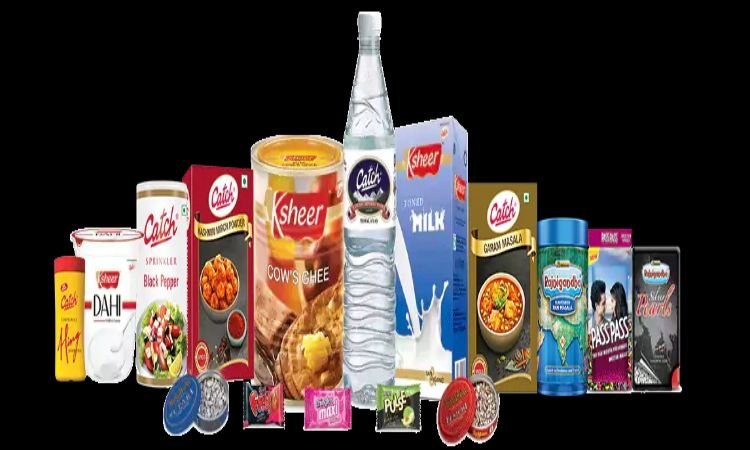
DS Group, operating 32 manufacturing units and 31 strategic depots, has built the same kind of anchor-point infrastructure that underpins HUL’s or Dabur’s reach, enough to service consistent retail penetration for a portfolio spanning confectionery, mouth fresheners, dairy, and packaged foods without leaning entirely on third-party logistics. That’s why DS Group brands like Rajnigandha, Catch, and Pulse Candy show up with the same shelf consistency in a small-town kirana store as in a metro supermarket.
Depth Versus Width
People often conflate the breadth of a distribution network with its depth, and the two are quite different. Width is how many areas a company can reach; depth is how consistently those outlets are serviced, whether the product is actually on the shelf, not just technically available. A company can have dealerships in every state and still see patchy tier-3 availability if its secondary distribution is weak.
Companies that have genuinely cracked depth, HUL and Dabur among them, run a multi-tier system where national distributors hand off to regional stockists, who service local retailers on a defined route. That requires depots, trained field staff, and logistics capable of handling volume and variety, plus enough product categories to make each outlet visit worthwhile, part of why the largest conglomerates, DS Group included, tend to carry broad portfolios rather than a single product line.
What Makes a Network Hard to Replicate
The real advantage of a large distribution network isn’t just its size but the time it took to build and the relationships within it. A distributor who has worked with a company for fifteen years, servicing the same retailers on a daily route, has built trust and efficiency a new entrant can’t buy. This is why distribution is often called one of FMCG’s most durable advantages, more so than formulations or brand recognition, because it’s structural rather than perceptible.
Kirana stores remain central here, still accounting for most FMCG purchases by volume outside the large metros. These stores stock a curated selection based on what sells, so companies with a permanent shelf position in thousands of them have a baseline visibility that’s very hard to displace, which requires a reliable supply chain, competitive trade margins, and regular servicing.
Cold chain and category-specific handling is the other differentiator. Food and dairy require infrastructure beyond standard ambient logistics, and companies that have invested in it gain access to categories closed off to less-equipped players, DS Group’s dairy manufacturing footprint alongside its confectionery lines is a direct example. Each new category a diversified conglomerate adds can ride existing routes rather than requiring a fresh build, which is why distribution advantages compound over time.
A network’s structure ultimately reflects a company’s philosophy, building for long-term access or optimising for short-term coverage, and that shows up in how consistently products reach smaller towns and rural markets. On that measure, HUL, Dabur, ITC, and DS Group’s depot-anchored model represent different routes to the same structural goal.